
Real Estate
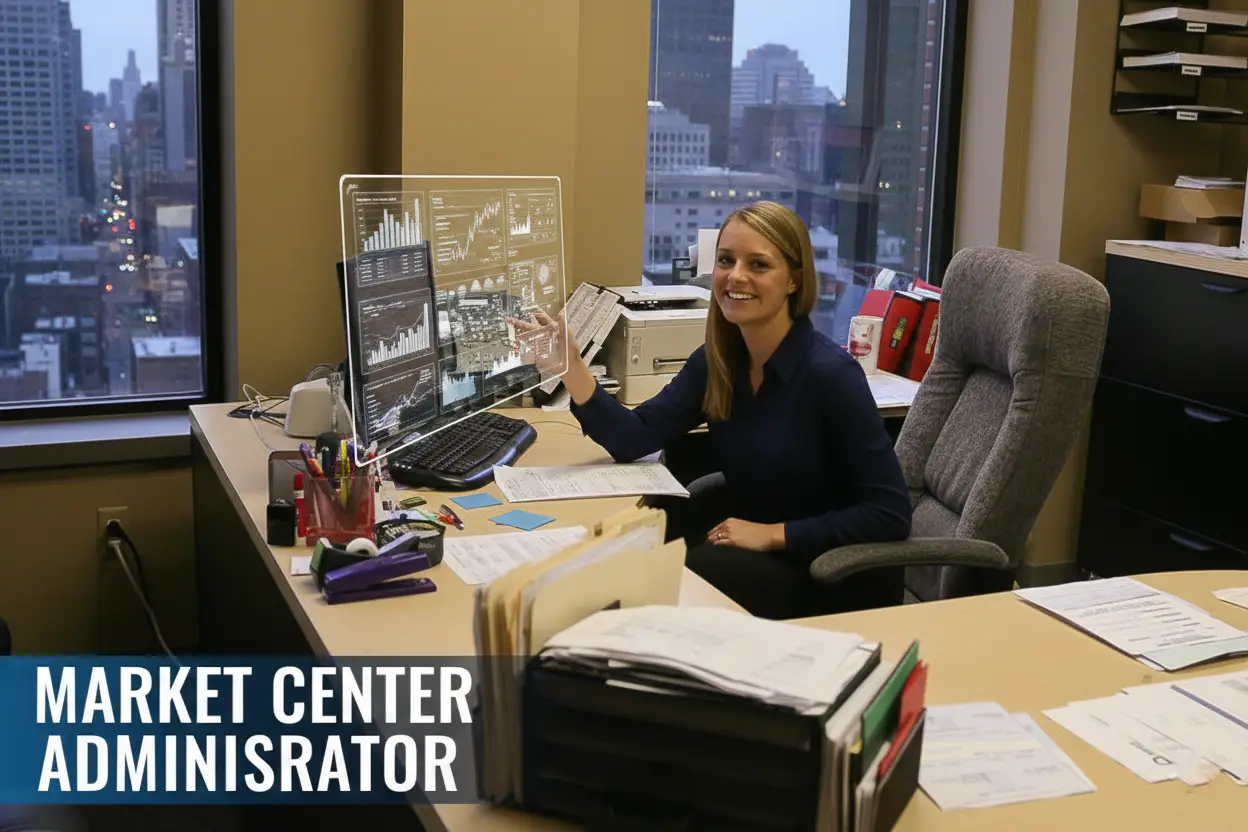
Market Center Administrator: The Complete Guide to Role, Skills, Salary, and Career Growth

Introduction
Behind every successful real estate office, there is a system that keeps everything organized, efficient, and running without chaos. While agents often receive most of the spotlight, the true operational strength usually comes from a highly skilled professional working behind the scenes. That professional is known as the market center administrator. This role is not just about paperwork or office management; it is about being the structural backbone of an entire real estate operation.
As the real estate industry becomes more competitive and technology-driven, the responsibilities of a market center administrator have expanded rapidly. Today, this position requires leadership, financial awareness, people management, compliance knowledge, and the ability to keep multiple departments aligned. In this guide, you will learn exactly what this role involves, how it functions daily, what skills are required, salary expectations, career growth, and why it has become one of the most critical positions in modern real estate businesses.
Will You Check This Article: Florncelol: The Complete Guide to Its Meaning, Uses, Benefits, and Future Potential
What Is a Market Center Administrator?
A market center administrator is the senior operational manager of a real estate office, especially within large franchise-based brokerages. This professional ensures that all administrative, financial, legal, and compliance systems function smoothly. While agents focus on buying and selling property, the market center administrator focuses on running the business engine that allows those transactions to happen efficiently.
This role blends office management with executive-level decision-making. It involves supervising staff, managing finances, maintaining compliance with real estate laws, overseeing recruiting support systems, and aligning daily operations with the long-term business goals of the company. In many offices, the market center administrator is considered the most powerful non-agent leader in the organization.
Why the Market Center Administrator Is So Important
Without a strong operational foundation, even the most talented agents struggle to perform consistently. The market center administrator provides that foundation by ensuring systems run correctly, errors are minimized, and productivity stays high. This role is responsible for turning vision into structure and plans into processes.
A strong market center administrator does more than manage tasks. They protect the company legally, stabilize its finances, support leadership decisions, train support staff, and create a professional environment where real estate agents can scale their income without operational roadblocks. That is why this role is viewed as the stabilizing force of the entire market center.
Core Responsibilities of a Market Center Administrator
The daily responsibilities of this role touch nearly every department within a real estate office. One of the most important duties is financial management. This includes budget planning, expense tracking, commission processing, payroll coordination, and financial reporting. Accuracy and confidentiality are critical in this area.
Another major responsibility is legal and compliance oversight. Real estate laws, licensing regulations, contract standards, and company policies must all be followed precisely. The market center administrator ensures that every transaction, file, and agreement meets legal requirements. They also handle audits and serve as the bridge between brokers, agents, and regulatory bodies.
Staff supervision and training also fall under this role. Office administrators, transaction coordinators, reception staff, and compliance assistants often report directly to the market center administrator. They are responsible for hiring, onboarding, performance reviews, and maintaining a positive, professional team culture.
Daily Work Life of a Market Center Administrator
A typical day for a market center administrator is structured but fast-moving. Mornings often begin with reviewing financial dashboards, commission disbursements, and compliance reports. Any issues from the previous day are addressed quickly before they create delays or agent frustration.
Throughout the day, they meet with leadership, handle staff concerns, solve operational problems, approve expenditures, and ensure transactions are processed without errors. They also monitor systems such as customer relationship platforms, transaction software, and internal communication tools. In many ways, the market center administrator acts as the control tower of the entire office.
Key Skills Required for This Role
Success in this position depends on a powerful mix of technical and interpersonal skills. Strong financial literacy is essential because this role handles budgets, profit and loss statements, and commission structures. Accuracy, attention to detail, and ethical responsibility are non-negotiable.
Leadership and communication skills are equally important. The market center administrator works with owners, agents, staff, vendors, and legal authorities. The ability to communicate clearly, resolve conflicts, and lead by example directly affects the health of the market center. Organizational ability, time management, and adaptability complete the skillset required for this challenging role.
Education and Background Needed
Most professionals who become market center administrators have experience in office administration, accounting, business management, or real estate operations. While a college degree in business, finance, or management is helpful, hands-on industry experience often matters more.
Many administrators rise through the ranks after working as administrative assistants, compliance coordinators, transaction managers, or financial officers within real estate brokerages. Industry certifications, leadership programs, and broker-sponsored training also play an important role in qualifying for this position.
Market Center Administrator vs Office Manager
Although these two roles sound similar, they are very different in scale and authority. An office manager typically handles scheduling, supplies, front desk staff, and basic support tasks. Their role is operational but limited in authority.
A market center administrator, however, oversees all major administrative systems, finances, compliance, and staff leadership. They sit closer to executive leadership and heavily influence business decisions. Their responsibilities go far beyond surface-level office operations.
How This Role Impacts Agent Success
Real estate agents thrive in environments where systems work smoothly. Commission accuracy, legal compliance, CRM systems, transaction processing, and client communication tools all influence agent performance. The market center administrator ensures these systems remain reliable and efficient.
When systems fail, agents lose deals, face legal trouble, and waste time fixing administrative problems. When systems work perfectly, agents close more transactions and increase their income. This is why many top real estate producers view the market center administrator as their most important business partner behind the scenes.
Technology and Systems Managed by the Administrator
Modern real estate offices rely heavily on digital platforms. These include transaction management software, accounting systems, lead generation platforms, marketing tools, and internal communication dashboards. The market center administrator oversees the implementation, maintenance, and troubleshooting of these systems.
They also coordinate with software providers, ensure data security, manage user access, and confirm that agents are trained on how to use the tools effectively. Technology management is now one of the core pillars of the market center administrator role.
Salary Expectations and Earning Potential
The salary of a market center administrator varies by region, brokerage size, and experience level. In general, this role commands a strong income due to its high responsibility level. Entry-level administrators may earn moderate salaries, while experienced professionals in large market centers can earn six-figure incomes.
In many organizations, bonuses, performance incentives, and profit-sharing opportunities are also available. This makes the position not just stable but also financially rewarding for those who perform at a high level.
Career Growth and Long-Term Opportunities
This role offers significant long-term career growth. Many administrators move into regional leadership positions, brokerage ownership, consulting roles, franchise operations, or executive-level business management. Their deep understanding of real estate operations allows them to scale into even higher positions over time.
The strategic view that a market center administrator gains across finance, law, leadership, marketing, and operations makes them uniquely qualified for top-tier business roles within and beyond real estate.
Challenges Faced in This Role
Despite its rewards, the role is not without challenges. High responsibility, long hours, error-free expectations, and constant problem-solving create mental pressure. Agents rely heavily on systems, and even small mistakes in compliance or finance can have major consequences.
Another challenge is balancing authority with approachability. The market center administrator must enforce rules while maintaining positive relationships with agents and staff. Emotional intelligence plays a major role in succeeding under these pressures.
Why Demand for Market Center Administrators Is Growing
As real estate operations become larger and more complex, the need for structured leadership increases. Brokerages now operate like full-scale corporations with legal teams, finance departments, marketing units, and technology divisions. This growth naturally increases demand for skilled operational leaders.
The market center administrator role is no longer optional for serious brokerages. It has become a core leadership position essential for scaling, compliance, and long-term business sustainability.
How to Become a Market Center Administrator
People who aim to enter this profession should start by gaining experience in real estate administration, finance, compliance, or transaction management. Learning multiple departments gives candidates an operational advantage.
Strong computer skills, accounting knowledge, leadership ability, and legal awareness are key areas to develop. Many successful administrators also build their reputation by supporting agents, solving complex problems, and contributing actively to company growth before being promoted.
Real-World Impact of This Role
In the real world, the success or failure of an entire real estate office often depends on the performance of one person — the market center administrator. Offices with strong administrators experience smoother transactions, higher agent retention, fewer legal issues, and better profitability.
On the other hand, weak administrative leadership leads to confusion, compliance risks, financial errors, and internal conflict. This makes the role one of the most influential positions in the modern real estate structure.
The Human Side of the Market Center Administrator
Beyond systems and reports, this role involves supporting people. Agents face stress, deal failures, legal worries, and client disputes. Staff members deal with pressure, deadlines, and performance expectations. The market center administrator becomes the emotional stabilizer of the workplace.
By offering guidance, structure, and consistency, they create a professional environment where people can work with confidence. This human leadership element is what separates average administrators from truly exceptional ones.
How This Role Shapes Company Culture
Office culture is not built by slogans on walls; it is built by daily systems, leadership responses, and accountability. The market center administrator influences how rules are applied, how people are supported, and how performance is measured.
Fair systems, transparent policies, and consistent leadership create a culture of trust and professionalism. Poor systems create fear, confusion, and burnout. That is why the market center administrator plays a direct role in shaping the emotional and professional health of the entire office.
Future Outlook of the Market Center Administrator Role
With the growth of digital real estate platforms, remote teams, artificial intelligence, and automation, the role of the market center administrator will continue to evolve. However, leadership, accountability, and strategic oversight will always require human intelligence.
Technology will assist the role, but it will never replace the need for an experienced administrator who can combine systems thinking with people management. The future of this profession looks strong and secure.
Conclusion
The market center administrator is far more than an office manager or records handler. This role stands at the center of finance, compliance, leadership, technology, and culture within a real estate operation. From supporting agents and protecting legal integrity to driving system efficiency and financial stability, this position silently shapes the success of the entire organization.
As the real estate industry continues to expand and modernize, skilled administrators will become even more valuable. The market center administrator is no longer a background role but a strategic leadership position that determines how far a market center can grow and how strong its foundation truly is.
Introduction
On 1 May 2025, the iconic Sandringham Estate in Norfolk stunned visitors and royal-fans alike by announcing an unexpected full-day shutdown. Dubbed the “sandringham estate emergency closure,” the move came without much advance warning and sparked questions about what led to the disruption and when normal operations might resume.
In this article we walk through the timeline, causes, visitor-impact and future outlook behind the sandringham estate emergency closure. Whether you were planning a trip, tracking royal news, or simply intrigued by a rare closure at such a prominent estate, you’ll find all the facts here.
Read More: Oti mabuse daughter
What is Sandringham Estate?
Heritage and significance
Sandringham Estate is one of the private residences of King Charles III located in West Norfolk, England.
Spanning roughly 20,000 acres, the estate includes the main house, extensive gardens, parkland and visitor facilities.
Thousands of people visit each year to explore the historic house, stroll the grounds and experience a royal connection.
Visitor operations and typical schedule
Under normal conditions, the estate opens to the public during selected months for tours of the house and gardens. A visit typically includes entry to the manor, gardens, café/restaurant and courtyard amenities.
The sandringham estate emergency closure interrupted all of these services — making it a rare occurrence in an otherwise stable visitor calendar.
The Emergency Closure: What Happened?
Timeline and announcement
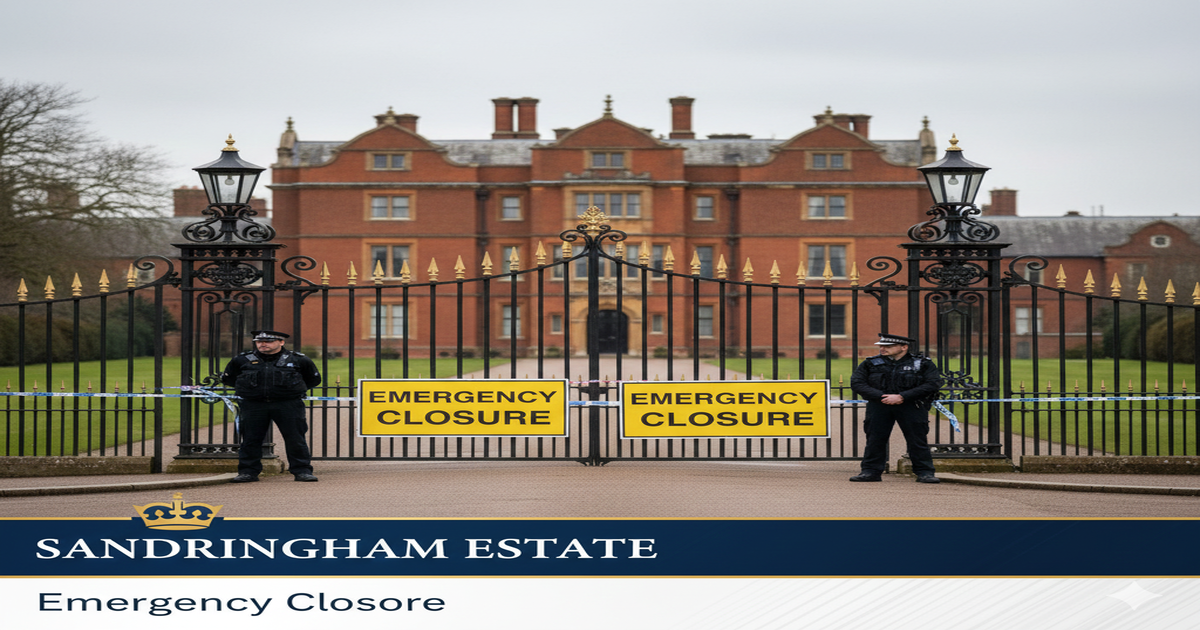
On Thursday 1 May 2025 the estate announced via its official channels that it was closed all day to visitors due to an emergency plumbing issue.
Exactly at what hour the notice was posted is unclear, but reports indicate the closure applied to the house, gardens, restaurant and courtyard facilities.
The parkland remained open, though with serious limitations (e.g., no toilet facilities).
Cause of the shutdown
According to a statement, the issue stemmed from a burst water main in the nearby village of Dersingham, which affected the water supply to the estate.
The result: very low or no water pressure in parts of the estate, affecting toilets, restaurant operations and visitor comfort.
The estate clarified the problem was not caused by internal estate plumbing per se, but by the external supply disruption.
What Was Impacted by the Sandringham Estate Emergency Closure?
The Emergency Closure: What Happened?
Visitors planning to tour the house and garden found gates closed or access restricted. The closure covered the interior of the house and formal gardens as well as surrounding facilities.
For photography, guided tours and events scheduled for that day, plans were either cancelled or postponed.
Restaurant, café & visitor amenities
Since the plumbing issue affected toilets, sinks and water flow, the estate’s café/restaurant and other indoor amenities were also shut down for the duration.
For many visitors this meant loss of refreshment services, lack of facilities and potential disappointment.
Public parkland
One partial exception: the larger parkland on the estate remained accessible, though with limitations (notably no toilet facilities).
This allowed visitors who arrived unexpectedly to at least walk the open grounds, but the experience was clearly different from the full tour
Scheduled events & bookings
Any prebooked tours, group visits or events on the day of the closure would have needed rescheduling. For the estate and ticket holders alike, this meant swift communication and possible refunds or alternatives.
If you had a booking around that date, it’s advisable to check directly with the estate.
Why This Matters: Broader Implications
Visitor experience and reputation
A closure of this kind – the “sandringham estate emergency closure” – is notable because the estate rarely shuts without major cause. For visitors, particularly tourists planning visits, such disruption can mean lost time, travel cost or dissatisfaction.
From a reputation perspective, consistent visitor experience helps attract future bookings. Unexpected closures can raise questions about facility reliability.
Underlying infrastructure and risk management
The incident highlights how even grand historic sites depend on modern infrastructure: water, plumbing, toilets, catering, safety. A burst main outside the estate still triggered a full-day shutdown inside.
It suggests that estates like Sandringham must maintain robust contingency plans. For visitors and event planners alike, being aware of potential disruption is prudent.
Impact on local economy and tourism ripple effect
The estate’s thousands of annual visitors bring local revenue—hotels, restaurants, transport. A temporary inability to host tours could ripple out to the local economy.
For wider tourism in Norfolk, such incidents may prompt visitors to check ahead and consider flexibility in plans.
How to Stay Updated & What Future Visitors Should Know
Checking official channels
If the estate issues further updates after the sandringham estate emergency closure, you’ll want to monitor the official website of Sandringham Estate and its social-media accounts. Press releases and visitor notices will give the earliest information on reopening.
Subscribing to their newsletter or following on platforms like Instagram or Twitter may help you get first alerts.
Booking with flexibility
If you’re planning a visit in the near future:
- Choose booking options that allow cancellations or changes if conditions shift.
- Arrive early and confirm the estate is open that day (especially shortly after any reported closure).
- Be aware of potential alternative activities: even if the main house is closed, grounds or parkland might remain accessible.
Planning day-out expectations
Given the impact of the closure on amenities:
- Pack essentials (water bottle, snacks) in case café access is limited.
- Be prepared for alternative walking routes if the house/gardens are inaccessible.
- Confirm if toilets, indoor exhibits and dining spaces are operational before assuming full access.
When the estate reopens
While I cannot predict exactly when full normal service will resume following the sandringham estate emergency closure, once the burst water main is repaired and infrastructure tested the estate is expected to reopen for tours and tours/amenities. The estate’s statement indicated repair work was under way.
Visitors should attempt a future booking only after official confirmation of full-service resumption.
What We Can Learn from This Incident
Importance of visitor communication
The estate’s prompt announcement of the issue (though perhaps after hours of uncertainty) underlines how important timely communication is when disruption arises. Apologising for inconvenience, explaining the cause and setting expectations helps retain trust.
In the modern era where last-minute changes are common, estates that communicate well tend to maintain credibility.
Infrastructure resilience in heritage sites
Historic properties like Sandringham Estate often rely on older buildings and modern upgrades. Yet the visible issue here stemmed from external infrastructure (a water main) proving that risk planning must extend beyond on-site systems.
For site managers everywhere, this is a case study in resilient operations: backup water sources, emergency toilet facilities, alternative visitor options.
Visitor flexibility
From the visitor’s point of view, any major historic or high-profile site may face unscheduled closures (weather, maintenance, security). Incorporating flexibility into travel plans—reserving loosely, checking updates, staying adaptable—can reduce disappointment.
The sandringham estate emergency closure serves as a reminder: even iconic places are subject to operational disruption.
Frequently Asked Questions (FAQ)
What caused the Sandringham Estate emergency closure?
The immediate cause was a burst water main near the estate (Dersingham area) which disrupted water supply to the house, gardens, toilets and restaurant facilities on the estate.
Was the entire Sandringham Estate closed?
Not quite. The main house, gardens, restaurant and courtyard facilities were closed to visitors, but the wider parkland remained open albeit without toilet facilities.
When did the closure happen?
The announcement was made 1 May 2025, and the closure applied that day. It is unclear exactly how long full service will be suspended or when every facility will be restored.
I had a booking on that day: what should I do?
If you had a pre-booked tour or event, contact the Sandringham Estate’s visitor services directly to check whether your tour has been rescheduled or cancelled and whether you are entitled to a refund or alternative date.
How will I know when the estate reopens?
Monitor the estate’s official website or social-media channels for announcements. Look for statements confirming repair of infrastructure, restoration of facilities and reopening of house/garden tours.
Conclusion
The sandringham estate emergency closure, though brief in timeframe, offers a revealing look at how even the most storied historic sites can be affected by modern infrastructure failures and visitor-services disruption. What might have seemed a minor plumbing issue outside the property instead triggered a full-day shutdown that impacted tours, facilities and visitor satisfaction.
For prospective guests, tour-operators and local businesses alike, the incident underscores the importance of flexibility, proactive communication and infrastructure resilience. While the estate remains a dazzling destination steeped in royal history, this event reminds us that behind the grandeur of the house and gardens lie real-world operational dependencies—and that being prepared, informed and patient pays off.
If you’re planning a visit to Sandringham Estate, consider building in a buffer day, checking for live updates and remaining ready for sudden changes. The estate will surely reopen its full range of services, and when it does, you’ll be able to enjoy the historic setting with even greater appreciation for what goes on behind the scenes.

Samaira Kapoor: A Glimpse Into Her Life, Legacy & Future

Pulsamento and the Hidden Pulse of Human Rhythm Explained

The Digital Rise of ninawelshlass1 Online Journey

Ben Shephard Wife Illness: What Is Really Known About Annie’s Health And Their Life Together

Mark Redknapp: The Real Story Behind Harry Redknapp’s Low-Key Son

How Old Is Emma Murphy ITV Reporter? Wikipedia, Age, Biography & Career Explained
-
 Celebrity3 days ago
10 Powerful Insights into Lucia Loi Life and Influence
-
 Celebrity3 days ago
Lee Juggurnauth Partner: Unveiling the Private Life of the Property Expert
-
 Celebrity3 days ago
The Inspiring Story of Melinda Trenchard: A Life of Strength, Love, and Legacy
-
 Celebrity3 days ago
Josephine Burge: The Untold Story, Life, and Legacy Behind an Inspiring Figure
-
 Celebrity3 days ago
The Inspiring Rise of Mollie Rose Hodge: A Story of Passion, Purpose & Influence
-
 Celebrity3 days ago
Daniela Elser: The Voice Redefining Modern Celebrity Commentary
-
 Celebrity3 days ago
Kate Sowden: A Complete Look into Her Life, Career, and Growing Influence
-
 Celebrity3 days ago
Helen Soby: An Inspiring Symbol of Determination, Creativity & Modern Success