Best Independent Slot Sites 2026 Fast Payouts

Best Independent Slot Sites 2026 Fast Payouts
Two players, same Friday night. One logs into a sprawling casino app, scrolls past forty live dealer tables, and finally finds the slot search bar buried three menus deep. The other opens a lean independent site, taps a single tile, and is spinning reels within twenty seconds. Neither approach is wrong, but they suit different temperaments. If you value speed, clarity and a lobby built entirely around spinning reels, the independent operators in this guide are worth a closer look.
This article covers the best independent slot sites for 2026, with an eye on fast payouts. We will walk through how slots actually work under the bonnet, how to read RTP and volatility without guesswork, which features define modern titles, and where the UK stake limits currently stand.
What Makes a Slot Site ‘Independent’ in 2026?
An independent slot site typically means an operator that focuses on slots rather than a full-service casino with sportsbook, poker and live dealer rooms bolted on. That focus delivers real practical benefits. The lobby is smaller but curated, the search filters actually work, and the operator’s support team can talk about volatility and bonus buys without transferring you to another department.
Among the brands available to UK players, Betfair casino and Betvictor casino are household names with long histories, while LiveScore Bet and Mega Casino have built strong reputations for their slot lobbies specifically. Gala Casino, Sky Bet casino and Betano casino round out a list of operators that all hold UK Gambling Commission licences and display their licence numbers clearly at the footer of their sites. The UKGC regulates all online gambling for UK players, so you always have a formal route for complaints if something goes wrong.
Independence also affects how you get paid. A focused slots operator processes withdrawals faster because there is less cross-product reconciliation to manage. Most of these sites now offer e-wallets, bank transfers and card payouts, with many clearing requests within hours rather than days. For a fuller picture of how quickly you can expect your money, our dedicated guide to payments and payouts breaks down the typical processing windows across the market.
How Slots Work: Mechanics, Volatility and RTP Ranges
Every slot you play is a random number generator (RNG) at heart. The software produces a sequence of numbers thousands of times per second, and each number maps to a specific reel position. When you press spin, the game simply freezes the current number and displays the corresponding symbols. That is why slot outcomes are impossible to predict and why no strategy can influence the result of a single spin.
Return to Player, or RTP, is the percentage of all wagered money a game returns to players over a very long period. A slot with a 96.5% RTP returns £96.50 for every £100 staked, in theory, across millions of spins. In practice, your own session can end anywhere. RTP is a statistical average, not a personal guarantee. Most modern slots sit between 94% and 97.5%, with the best independent sites curating games at the upper end of that range.
Volatility describes the risk profile of a game. Low volatility slots pay small amounts frequently, which suits longer sessions and casual play. High volatility slots pay less often but deliver larger wins when they land, which suits players chasing a single big hit. Medium volatility sits in the middle. There is no universally ‘best’ volatility; the right choice depends entirely on your bankroll and patience.
A useful way to think about it: a low-volatility game is like a salary, a high-volatility game is like a lottery ticket with better odds. Neither is superior, but they demand different temperaments. If you are new to slots, start with low or medium volatility to learn the mechanics before you commit real money to a high-variance title.
Reading RTP and Volatility Properly
Many players glance at an RTP figure and assume higher is always better. That is true in isolation, but the figure only matters in context. A 97% RTP game with extreme volatility will empty your balance far faster than a 95% game with gentle payouts, simply because the dry spells are longer. Always consider RTP and volatility together, never in isolation.
Certified RNG testing is non-negotiable. Under the UK regime, every game offered to UK players must have its RNG tested and certified by an approved independent laboratory. The UK Gambling Commission requires licensed operators to ensure their games are fair, and the testing bodies verify that the software produces genuinely random results. When you play at a UKGC-licensed site, you are protected by this framework.
You can usually find the RTP figure for any slot in the game’s information screen, often marked with an ‘i’ icon. Some operators also publish RTP ranges in their lobby. If a game has a configurable RTP, the operator must display the version they are offering. A site that hides this information is a red flag, and you should take your business elsewhere.
It is also worth remembering that wagering requirements are set by individual operators, not by law. They commonly range from about 20x to 65x, so a £50 bonus at 35x requires £1,000 in total turnover before you can withdraw any winnings. Always read the terms before you accept a bonus, because the requirements determine whether the offer is actually worth taking.
Feature Mechanics That Define Modern Slots
The modern slot landscape is defined by a handful of recurring mechanics. Megaways, originally developed by Big Time Gaming, uses a dynamic reel system where the number of symbols per reel changes on every spin. This can produce hundreds of thousands of ways to win, which is why Megaways games feel so explosive. The mechanic has since been licensed to dozens of providers, so you will find Megaways titles across most reputable lobbies.
Jackpot slots offer a different kind of appeal. Progressive jackpots pool a small percentage of every stake into a growing prize that keeps climbing until someone hits it. The odds of winning a progressive jackpot are typically very long, but the potential return is life-changing. Fixed jackpots, by contrast, offer a set top prize that does not grow, but they usually pay out more frequently.
Hold and nudge mechanics, popular in classic fruit machines, have made a strong comeback. These games give you control over individual reels after a spin, letting you hold a promising symbol in place or nudge a reel to complete a winning line. The added agency makes the game feel more skill-based, even though the underlying RNG still governs everything.
Bonus buys are another modern staple. For a multiple of your stake, typically 50x to 100x, you can skip straight to the free spins round. This is a high-risk, high-reward approach that suits experienced players who understand the variance. If you are new to a game, play the base rounds first to learn how the bonus behaves before you spend extra to trigger it directly.
UK Stake Limits and Responsible Session Structure
Since 2025, the UK has imposed formal stake limits on online slots. The maximum stake is £5 per spin for players aged 25 and over, and £2 per spin for players aged 18 to 24. These limits apply to all UKGC-licensed operators, so every site in this guide operates within them. If you see a UK-facing site offering higher stakes, it is not properly licensed, and you should avoid it.
These limits are designed to reduce the speed at which players can lose money. Slots are fast games, and a £5 stake at 10 spins per minute represents £3,000 of turnover per hour. Even a small house edge adds up quickly at that pace. The stake cap is a sensible guardrail, but it does not remove the need for personal discipline.
A responsible session structure is simple. Decide your budget before you open a game, split it into sessions of no more than 30 to 45 minutes, and set a loss limit that triggers a hard stop. Many operators now offer deposit limits, loss limits and session reminders that you can set from your account dashboard. Use them. The best independent slot sites make these tools prominent rather than burying them in a settings menu.
Remember that using a credit card to fund a gambling account has been against the rules in Great Britain since April 2020. You cannot use a credit card to deposit at a UKGC-licensed site, so plan your bankroll around debit cards, e-wallets or bank transfers. This ban exists to prevent players from gambling with borrowed money, and it is one of the strongest consumer protections in the UK market.
Where the Category Plays Best: Providers and Operator Lobbies
The quality of a slot site depends heavily on which providers it carries. The leading studios, including NetEnt, Play’n GO, Pragmatic Play and Big Time Gaming, produce the most polished and innovative titles. A good independent lobby will carry games from several of these studios, not just a single provider’s catalogue.
Demo play is another crucial differentiator. The best independent sites let you try any game for free before you stake real money. This is invaluable for testing volatility and learning bonus mechanics without financial risk. If a site forces you to deposit before you can spin, that is a sign they care more about your money than your experience.
| Notable Title | Provider | RTP | Volatility | Defining Feature |
|---|---|---|---|---|
| Book of Dead | Play’n GO | 96.2% | High | Expanding symbols in free spins |
| Starburst | NetEnt | 96.1% | Low | Both-ways wins and re-spins |
| Sweet Bonanza | Pragmatic Play | 96.5% | High | Tumble mechanic with multipliers |
| Bonanza | Big Time Gaming | 96.0% | High | Original Megaways system |
These figures are the standard RTP versions; some providers offer alternative configurations, so always check the version on your chosen site. Operator terms change over time, so verify the current RTP in the game’s information screen before you play.
Payout speed is where independent sites often excel. Because they process fewer withdrawal types, they can streamline verification and payment handling. Many now offer instant or near-instant e-wallet payouts, with bank transfers clearing within one to three working days. If you are after a fast withdrawal casino, check the operator’s stated processing times before you deposit.
| Operator | Provider Coverage | Demo Play | Typical Payout Speed |
|---|---|---|---|
| Betfair casino | NetEnt, Play’n GO, Pragmatic | Yes | Under 24 hours |
| Betvictor casino | NetEnt, Big Time Gaming | Yes | 1–3 working days |
| Mega Casino | Play’n GO, Pragmatic Play | Yes | Under 24 hours |
| LiveScore Bet | NetEnt, Pragmatic Play | Partial | 1–3 working days |
As with any commercial terms, payout speeds and demo availability can change, so confirm the current position on the operator’s own site before you commit.
If you enjoy the interactive side of online gambling, many of these operators also carry live game shows alongside their slots. Our guide to live game shows in the UK covers the best options if you want to switch between spinning reels and hosted games in a single session. And if you prefer to start small, our round-up of low-deposit casino options explains how to play without committing a large bankroll upfront.
Terms Glossary: What the Jargon Really Means
Slots come with their own vocabulary, and understanding it is the difference between playing with confidence and playing in the dark. Here is a compact glossary of the terms you will see most often.
| Term | Plain-English Meaning | Practical Note |
|---|---|---|
| RTP | Percentage of stakes returned to players over time | Average across millions of spins, not a session guarantee |
| Volatility | Frequency and size of payouts | High volatility means bigger but rarer wins |
| Wagering Requirement | How many times a bonus must be wagered before withdrawal | Typically 20x–65x; always read the terms first |
| Megaways | Dynamic reel system with up to 117,649 ways to win | Reel symbol counts change on every spin |
| Bonus Buy | Pay a multiple of stake to trigger free spins directly | High risk; learn the base game first |
Understanding these terms transforms how you read a game’s information screen. You will no longer ask whether a game is ‘good’ in the abstract; instead, you will ask whether it fits your bankroll, your patience and your appetite for risk.
How to Choose Your First Independent Slot Site
Start with the licence. Every operator in this guide holds a UKGC licence, which you can verify by cross-referencing the licence number in the site footer with the official UKGC register. If a site cannot show a valid licence, walk away, no matter how attractive its bonuses look.
Next, check the payment methods. The best independent sites support the e-wallets you already use, alongside debit cards and bank transfers. If your preferred payment method is missing, that is a practical problem that will annoy you every single time you deposit or withdraw.
Then look at the lobby itself. A good independent slot site organises games by provider, volatility and feature type, with filters that actually work. You should be able to find a Megaways game, a classic fruit machine and a progressive jackpot within three clicks. If the search function feels like an afterthought, the site is not built for slot players.
Finally, test the support team before you deposit. Send a question about wagering requirements or withdrawal times and see how quickly they respond. A site that answers clearly and quickly will treat you well when you have a problem. A site that ignores you before you have deposited will ignore you after you have lost money.
For a broader view of what safe, licensed online gambling looks like in 2026, our overview of safe and licensed online gambling explains the regulatory framework in plain English.
Quickfire Answers to Common Questions
What is the difference between RTP and volatility?
RTP is the theoretical percentage of stakes returned to players over a very long period, while volatility describes the frequency and size of payouts. A high-RTP game can still drain your balance quickly if it has high volatility, because the dry spells are longer. Always consider both figures together when choosing a game.
When should I use demo play before staking real money?
Always, if the site offers it. Demo play lets you test a game’s volatility, bonus mechanics and general feel without risking a penny. It is especially valuable for high-volatility games and bonus-buy titles, where a single misunderstanding can cost you a significant chunk of your bankroll.
Why are progressive jackpot odds so long?
Progressive jackpots pool a small percentage of every stake across many players into a growing prize. Because the prize is funded by contributions from thousands of spins, the odds of any single spin hitting the jackpot are extremely low. The potential reward is enormous, but you should treat progressive play as entertainment, not a savings plan.
Can I set limits on how much I spend?
Yes. All UKGC-licensed operators offer deposit limits, loss limits and session reminders that you can set from your account dashboard. These tools are free and take effect immediately, and you can adjust them if your circumstances change. Using them is the single most effective way to keep slots as entertainment rather than a financial problem.
Is it safe to play at independent slot sites?
It is safe if the site holds a valid UKGC licence and displays its licence number clearly. The UKGC requires licensed operators to use certified RNGs, offer self-exclusion through GAMSTOP, and provide access to support services. Stick to licensed sites and you have formal protection if something goes wrong.
Slots are designed for entertainment, not income. The house edge means the odds are always against you in the long run, and every spin carries a cost. Play for fun, set strict limits, and never chase losses. If gambling stops being enjoyable, take a break or seek support.
All gambling is 18+. If you are concerned about your gambling, GambleAware offers free, confidential support at BeGambleAware.org, and GAMSTOP provides free self-exclusion across all UKGC-licensed sites at gamstop.co.uk. These services are there to help, and using them is a sign of strength, not weakness.

Health & Fitness
The Mock Audit That Pays for Itself: How Internal RADV Simulations Reduce Real Audit Exposure


The Cheapest Audit Defense You Can Build
Internal RADV simulations cost a fraction of actual audit response. A plan selects 100 to 200 enrollee-years from its submitted data, oversampling high-risk diagnosis categories. An internal review team evaluates each sampled HCC against MEAT criteria using the same standard CMS auditors apply. The team calculates an internal error rate, identifies which diagnosis categories fail most often, and documents the specific documentation failures driving those results.
The simulation produces three things no other compliance activity delivers. First, a predictive error rate that forecasts what CMS will find when the real audit arrives. Second, a prioritized remediation list identifying the specific documentation gaps that contribute most to audit failure. Third, a rehearsal of the audit response process that reveals operational bottlenecks before they matter under real deadline pressure.
How to Design a Simulation That Predicts Real Results
The simulation’s predictive value depends on how closely it replicates CMS’s methodology. Sample from your submitted data, not from your coding queue. Include members whose codes were submitted in prior years that haven’t been re-validated. Oversample the high-impact diagnosis categories CMS is known to target: acute stroke, MI, cancer, and other conditions OIG audits have focused on.
Apply the MEAT standard strictly. If the documentation doesn’t show active monitoring, evaluation, assessment, or treatment of the condition during the relevant encounter, the code fails. Don’t give credit for “the provider probably managed this condition.” CMS auditors don’t infer management that isn’t documented. Your simulation shouldn’t either.
Use reviewers who weren’t involved in the original coding decision. If the coder who submitted the code also evaluates it in the simulation, confirmation bias inflates the pass rate. Independent reviewers produce error rates closer to what CMS auditors will find because they evaluate documentation without the context the original coder had.
What the Results Tell You
An internal error rate below 15% suggests your coding program produces predominantly defensible output. Focus remediation on the specific categories and documentation patterns that make up the failing 15%.
An error rate between 15% and 40% signals systematic documentation gaps that need programmatic fixes: enhanced MEAT validation in the coding workflow, category-specific evidence thresholds for high-risk diagnoses, and provider education targeting the documentation patterns that fail most frequently.
An error rate above 40% indicates the program is producing output that won’t survive RADV scrutiny at current quality levels. This requires structural intervention: technology changes, methodology redesign, and immediate proactive deletion of the weakest codes from the plan’s active submissions.
The Investment That Pays Before the Audit Arrives
A quarterly internal simulation costs less than a single week of real RADV response. It predicts audit outcomes before they happen, identifies remediation targets while there’s still time to fix them, and stress-tests the response process under controlled conditions. Plans running regular radv audits simulations convert a reactive, high-stress compliance function into a proactive, predictable one. The simulation doesn’t prevent the audit. It prevents the surprise.
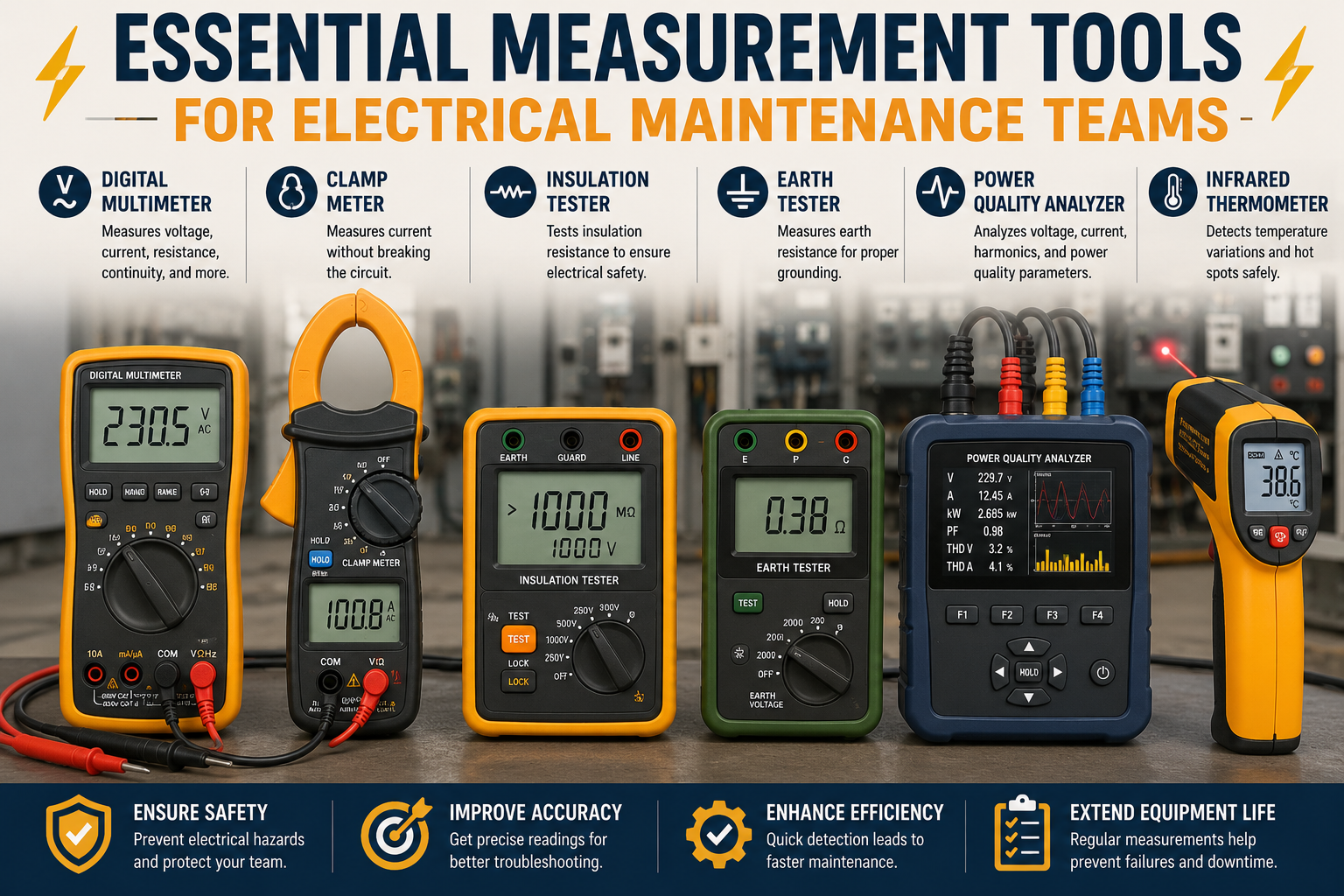
The job of an electrical maintenance team goes far beyond merely reacting to faults. That’s because, whether such personnel are operating across commercial premises, industrial installations, or facilities management environments, they also need to be proficient in overseeing accurate diagnostics, preventative testing, and documentation for compliance. These are all vital elements of maintenance.
To accomplish all this, however, these team members will need access to suitable electrical measurement tools. This will leave them strongly placed to identify issues earlier, minimise downtime, and improve electrical safety.
Here, then, are some of the measurement instruments they should have to hand.
- Digital Multimeters (DMMs): The Everyday Essential
If there is a single measurement tool that can claim to be the backbone of any electrical toolkit, it has to be a digital multimeter.
Often the first tool a maintenance staffer takes out of their case, a DMM supports routine fault-finding and verification by measuring:
- AC/DC voltage
- AC/DC current
- Resistance
- Continuity
- Diode function
- In some models, capacitance and frequency
The reputation of digital multimeters as hugely versatile testing tools can be attributed to their combination of multiple measurement functions into one handheld device. They’re a “go-to” for the quick diagnosis of circuits, outlets, motors, and control panels.
For maintenance staff whose work will bring them into contact with variable speed drives, modern building systems, and non-linear loads, it is advisable to seek out a DMM with true-RMS (Root Mean Square) capability.
- Clamp Meters: Safe Current Measurement
Also often referred to as “current clamps”, clamp meters give electricians and maintenance engineers a way of measuring current without the need to disconnect conductors. This can be ideal for live systems where breaking the circuit wouldn’t be a practical course of action.
So, whenever maintenance professionals find themselves needing to measure load current on cables, check for imbalances in three-phase systems, or troubleshoot motors or HVAC installations, a clamp meter can be an indispensable tool to have.
- Insulation Resistance Testers: Prevent Problems Before Failure
The degradation of insulation is a common cause of electrical faults. So, it greatly helps maintenance personnel if they have an instrument to hand that can detect such deterioration in cables, motors, transformers, and switchgear.
This is exactly what an insulation resistance tester, also often called a “megohmmeter” or even just an “insulation tester”, enables them to do.
A megohmmeter helps the evaluation of insulation condition by applying a controlled test voltage. This allows maintenance teams to identify deterioration early and reduce the risk of faults or hazards.
- Earth And Installation Testers: Supporting Compliance and Safety
It is critical for electrical installations to perform safely under fault conditions.
Installation testers can greatly help here, by enabling maintenance teams to verify such aspects as earth continuity, loop impedance, residual current device (RCD) performance, earth resistance, and installation integrity.
An installation tester is a comprehensive, multifunction diagnostic device for verifying the safety and integrity of fixed electrical wiring.
Meanwhile, an earth tester serves the purpose of measuring the electrical resistance between an installation’s earthing system and the soil.
- Oscilloscopes: Seeing Problems That Meters Miss
As useful as a standard multimeter can be, a key limitation is that it only provides numerical measurements. As a result, it may not reveal transient behaviour or waveform shape. An oscilloscope, on the other hand, helps reveal electrical noise, spikes, signal distortion, and transient events.
By showing how electrical signals change over time, an oscilloscope can help draw attention to issues that might otherwise stay hidden to maintenance engineers.
Just A Few More Things for Maintenance Teams to Bear in Mind…
…it might seem overly “obvious” advice, but it is worth emphasising the importance of investing in quality tools from reputable suppliers. This helps ensure the equipment can rapidly pay for itself through reduced downtime and fewer emergency callouts.
Remember, too, that the instruments featured in this rundown must always be paired with proper training, appropriate personal protective equipment (PPE), and adherence to relevant regulations and standards. An example of the latter is the IET Wiring Regulations (BS 7671) for maintenance teams operating in the UK.

Imagine your Leicester student life as a dream TikTok video, where everything comes easily and is both beautiful and aesthetically pleasing. Friends are sharing Reels of stylish flats near universities, holding an iced latte. Meanwhile, “cheap rooms Leicester” starts to trend online.
Approximately 40,000 students enrol each year at either the University of Leicester or De Montfort University, enjoying the delicious curries and exciting football games. Although expenses may appear daunting initially, the best student accommodation Leicester will have you sorted. With this guide, you’ll learn the best neighbourhoods to stay in, room options, and ways to ensure safety and security while booking.
Understanding the Cost of Student Living in Leicester
The cost of living in Leicester is balanced, making it easy for students looking for De Montfort University accommodation and accommodation in Leicester. The primary cost here will be rent; however, even that is relatively low, so that the student will not have to worry about moving out early. Secondly, bills can be considered, but when shared with others, they become manageable. Food can also be purchased from the local markets, which are not expensive. The level ground makes bicycles a better means of transport than buses, which are cheaper.
Where to Live: Affordable Student Areas in Leicester
The neighbourhoods in Leicester vary as widely as your favourite playlists, ranging from energetic fun spots to serene hideouts with fast commutes to school via bike or bus routes, making them suitable options for those looking for student accommodation Leicester.
- Clarendon Park
Clarendon Park is a suburb located to the south of the city and characterised by vibrant cafes and beautiful parks where you can enjoy leisure time like it is from those soothing coffee clips found online. The rents here are relatively cheap; hence, there will always be enough money left to go to brunch and take pictures. It is easy to commute to school by public transport.
- Highfields
Highfields is located right next to the University of Leicester campus, with food kiosks and markets offering a range of tastes, along with green parks ideal for picnics and leisurely walks, making any dull day feel cheerful. Travelling by foot means not spending any money on getting around town, making it easier to get around university life without breaking the bank.
- West End
West End welcomes all party-loving souls with luxurious homes of the past turned into places where you can enjoy pubbing in low-cost drinks, running into markets full of delicious foods, and taking fast public transportation to both universities. It provides you with all the fun and entertainment without feeling chaotic like your favourite song on repeat.
- City Centre
City Centre is ideal for those seeking an easy life, as it is only a short walk from DMU, with nearby Highcross shopping centres, restaurants, and cinemas to ensure an enjoyable evening, with walking taking care of transport, food, and entertainment. Although pricey, it ensures you save much-needed time by avoiding endless waiting hours.
- Evington
Evington provides a peaceful environment to the east, with convenient shops, the picturesque Evington Park, perfect for barbecue or studying and a bike ride to school. Budget-friendly and not too energetic, it helps you avoid chaos and enjoy true relaxation. As a lesser-known option, it offers you much-needed tranquillity at affordable rates.
Choosing the Right Type of Affordable Accommodation
Just like the choice of music depends on the individual’s personality, so does the selection of accommodation, since there is a room type that will suit everyone.
- Shared houses
Sharing a house with others means that the costs are split equally among all of them; the renter gets a private bedroom but shares the communal kitchen and lounge, where people cook meals, watch television together into the night, and make lots of friends at very little expense.
- Student halls
Campus hall accommodations provide an automatic sense of security, access to various student activities, and a place where they can start their university life hassle-free, without having to deal with the landlord.
- Ensuite rooms
Ensuite rooms mean sharing everything except the bathroom, and the prices are reasonable enough to be affordable for most people who love cleanliness.
- Studio apartments
For people craving absolute privacy and independence, studio flats offer a perfect solution, as they have a bed, kitchen, and bathroom all in one, allowing personalisation of one’s space.
Best Budget Student Accommodations in Leicester
| Property Name | Area | Starting Price | Key Advantage | Ideal For |
| Ben Russell Court | West End | £85 | Very affordable rent | Budget-first students |
| The Summit | City Centre | £110 | Bills included | Hassle-free living |
| Castle Court | City Centre | £115 | Close to DMU | Walk-to-campus |
| Regents Court | City Centre | £120 | Modern facilities | Comfort + value |
| Upperton Road | West End | £105 | Good connectivity | Social lifestyle |
Smart Tips to Save Money on Student Accommodation in Leicester
- Target Highfields for the Lowest Rents Near Campus: Being close to campus allows you to walk to university and save some money to spend on small treats on the way there.
- Walk or Cycle Instead of Living in the City Centre: With flat terrain, it is easy to avoid paying for travel and enjoy the fresh air on your way.
- Choose All-Inclusive Student Halls in Leicester: All-inclusive rent saves you unexpected future surprises. Booking with UniAcco gives you all-inclusive rent, which includes the utility bill, so there will be no surprises during the term.
- Book Before Peak Intake Seasons: By booking early, you’ll avoid peak rental times and high prices.
- Share Houses in Student-Dense Areas Like West End: Consider renting shared properties; sharing makes accommodation cheaper.
Conclusion
The comprehensive guide to Leicester’s budget options is all set for you, from exciting food outings in Highfields to fun places in the West End, from the fabulous Ben Russell Court to advice that keeps money flowing. No need for expensive budgets to lead an amazing life close to campus.
The Mock Audit That Pays for Itself: How Internal RADV Simulations Reduce Real Audit Exposure

Essential Measurement Tools for Electrical Maintenance Teams

Affordable Student Accommodation in Leicester: Where to Live on a Budget

Ben Shephard Wife Illness: What Is Really Known About Annie’s Health And Their Life Together

Mark Redknapp: The Real Story Behind Harry Redknapp’s Low-Key Son

Salish Matter – From YouTube Star to Global Teen Icon
Best Independent Slot Sites 2026 Fast Payouts
Best Independent Slot Sites 2026 Fast Payouts
Two players, same Friday night. One logs into a sprawling casino app, scrolls past forty live dealer tables, and finally finds the slot search bar buried three menus deep. The other opens a lean independent site, taps a single tile, and is spinning reels within twenty seconds. Neither approach is wrong, but they suit different temperaments. If you value speed, clarity and a lobby built entirely around spinning reels, the independent operators in this guide are worth a closer look.
This article covers the best independent slot sites for 2026, with an eye on fast payouts. We will walk through how slots actually work under the bonnet, how to read RTP and volatility without guesswork, which features define modern titles, and where the UK stake limits currently stand.
What Makes a Slot Site ‘Independent’ in 2026?
An independent slot site typically means an operator that focuses on slots rather than a full-service casino with sportsbook, poker and live dealer rooms bolted on. That focus delivers real practical benefits. The lobby is smaller but curated, the search filters actually work, and the operator’s support team can talk about volatility and bonus buys without transferring you to another department.
Among the brands available to UK players, Betfair casino and Betvictor casino are household names with long histories, while LiveScore Bet and Mega Casino have built strong reputations for their slot lobbies specifically. Gala Casino, Sky Bet casino and Betano casino round out a list of operators that all hold UK Gambling Commission licences and display their licence numbers clearly at the footer of their sites. The UKGC regulates all online gambling for UK players, so you always have a formal route for complaints if something goes wrong.
Independence also affects how you get paid. A focused slots operator processes withdrawals faster because there is less cross-product reconciliation to manage. Most of these sites now offer e-wallets, bank transfers and card payouts, with many clearing requests within hours rather than days. For a fuller picture of how quickly you can expect your money, our dedicated guide to payments and payouts breaks down the typical processing windows across the market.
How Slots Work: Mechanics, Volatility and RTP Ranges
Every slot you play is a random number generator (RNG) at heart. The software produces a sequence of numbers thousands of times per second, and each number maps to a specific reel position. When you press spin, the game simply freezes the current number and displays the corresponding symbols. That is why slot outcomes are impossible to predict and why no strategy can influence the result of a single spin.
Return to Player, or RTP, is the percentage of all wagered money a game returns to players over a very long period. A slot with a 96.5% RTP returns £96.50 for every £100 staked, in theory, across millions of spins. In practice, your own session can end anywhere. RTP is a statistical average, not a personal guarantee. Most modern slots sit between 94% and 97.5%, with the best independent sites curating games at the upper end of that range.
Volatility describes the risk profile of a game. Low volatility slots pay small amounts frequently, which suits longer sessions and casual play. High volatility slots pay less often but deliver larger wins when they land, which suits players chasing a single big hit. Medium volatility sits in the middle. There is no universally ‘best’ volatility; the right choice depends entirely on your bankroll and patience.
A useful way to think about it: a low-volatility game is like a salary, a high-volatility game is like a lottery ticket with better odds. Neither is superior, but they demand different temperaments. If you are new to slots, start with low or medium volatility to learn the mechanics before you commit real money to a high-variance title.
Reading RTP and Volatility Properly
Many players glance at an RTP figure and assume higher is always better. That is true in isolation, but the figure only matters in context. A 97% RTP game with extreme volatility will empty your balance far faster than a 95% game with gentle payouts, simply because the dry spells are longer. Always consider RTP and volatility together, never in isolation.
Certified RNG testing is non-negotiable. Under the UK regime, every game offered to UK players must have its RNG tested and certified by an approved independent laboratory. The UK Gambling Commission requires licensed operators to ensure their games are fair, and the testing bodies verify that the software produces genuinely random results. When you play at a UKGC-licensed site, you are protected by this framework.
You can usually find the RTP figure for any slot in the game’s information screen, often marked with an ‘i’ icon. Some operators also publish RTP ranges in their lobby. If a game has a configurable RTP, the operator must display the version they are offering. A site that hides this information is a red flag, and you should take your business elsewhere.
It is also worth remembering that wagering requirements are set by individual operators, not by law. They commonly range from about 20x to 65x, so a £50 bonus at 35x requires £1,000 in total turnover before you can withdraw any winnings. Always read the terms before you accept a bonus, because the requirements determine whether the offer is actually worth taking.
Feature Mechanics That Define Modern Slots
The modern slot landscape is defined by a handful of recurring mechanics. Megaways, originally developed by Big Time Gaming, uses a dynamic reel system where the number of symbols per reel changes on every spin. This can produce hundreds of thousands of ways to win, which is why Megaways games feel so explosive. The mechanic has since been licensed to dozens of providers, so you will find Megaways titles across most reputable lobbies.
Jackpot slots offer a different kind of appeal. Progressive jackpots pool a small percentage of every stake into a growing prize that keeps climbing until someone hits it. The odds of winning a progressive jackpot are typically very long, but the potential return is life-changing. Fixed jackpots, by contrast, offer a set top prize that does not grow, but they usually pay out more frequently.
Hold and nudge mechanics, popular in classic fruit machines, have made a strong comeback. These games give you control over individual reels after a spin, letting you hold a promising symbol in place or nudge a reel to complete a winning line. The added agency makes the game feel more skill-based, even though the underlying RNG still governs everything.
Bonus buys are another modern staple. For a multiple of your stake, typically 50x to 100x, you can skip straight to the free spins round. This is a high-risk, high-reward approach that suits experienced players who understand the variance. If you are new to a game, play the base rounds first to learn how the bonus behaves before you spend extra to trigger it directly.
UK Stake Limits and Responsible Session Structure
Since 2025, the UK has imposed formal stake limits on online slots. The maximum stake is £5 per spin for players aged 25 and over, and £2 per spin for players aged 18 to 24. These limits apply to all UKGC-licensed operators, so every site in this guide operates within them. If you see a UK-facing site offering higher stakes, it is not properly licensed, and you should avoid it.
These limits are designed to reduce the speed at which players can lose money. Slots are fast games, and a £5 stake at 10 spins per minute represents £3,000 of turnover per hour. Even a small house edge adds up quickly at that pace. The stake cap is a sensible guardrail, but it does not remove the need for personal discipline.
A responsible session structure is simple. Decide your budget before you open a game, split it into sessions of no more than 30 to 45 minutes, and set a loss limit that triggers a hard stop. Many operators now offer deposit limits, loss limits and session reminders that you can set from your account dashboard. Use them. The best independent slot sites make these tools prominent rather than burying them in a settings menu.
Remember that using a credit card to fund a gambling account has been against the rules in Great Britain since April 2020. You cannot use a credit card to deposit at a UKGC-licensed site, so plan your bankroll around debit cards, e-wallets or bank transfers. This ban exists to prevent players from gambling with borrowed money, and it is one of the strongest consumer protections in the UK market.
Where the Category Plays Best: Providers and Operator Lobbies
The quality of a slot site depends heavily on which providers it carries. The leading studios, including NetEnt, Play’n GO, Pragmatic Play and Big Time Gaming, produce the most polished and innovative titles. A good independent lobby will carry games from several of these studios, not just a single provider’s catalogue.
Demo play is another crucial differentiator. The best independent sites let you try any game for free before you stake real money. This is invaluable for testing volatility and learning bonus mechanics without financial risk. If a site forces you to deposit before you can spin, that is a sign they care more about your money than your experience.
| Notable Title | Provider | RTP | Volatility | Defining Feature |
|---|---|---|---|---|
| Book of Dead | Play’n GO | 96.2% | High | Expanding symbols in free spins |
| Starburst | NetEnt | 96.1% | Low | Both-ways wins and re-spins |
| Sweet Bonanza | Pragmatic Play | 96.5% | High | Tumble mechanic with multipliers |
| Bonanza | Big Time Gaming | 96.0% | High | Original Megaways system |
These figures are the standard RTP versions; some providers offer alternative configurations, so always check the version on your chosen site. Operator terms change over time, so verify the current RTP in the game’s information screen before you play.
Payout speed is where independent sites often excel. Because they process fewer withdrawal types, they can streamline verification and payment handling. Many now offer instant or near-instant e-wallet payouts, with bank transfers clearing within one to three working days. If you are after a fast withdrawal casino, check the operator’s stated processing times before you deposit.
| Operator | Provider Coverage | Demo Play | Typical Payout Speed |
|---|---|---|---|
| Betfair casino | NetEnt, Play’n GO, Pragmatic | Yes | Under 24 hours |
| Betvictor casino | NetEnt, Big Time Gaming | Yes | 1–3 working days |
| Mega Casino | Play’n GO, Pragmatic Play | Yes | Under 24 hours |
| LiveScore Bet | NetEnt, Pragmatic Play | Partial | 1–3 working days |
As with any commercial terms, payout speeds and demo availability can change, so confirm the current position on the operator’s own site before you commit.
If you enjoy the interactive side of online gambling, many of these operators also carry live game shows alongside their slots. Our guide to live game shows in the UK covers the best options if you want to switch between spinning reels and hosted games in a single session. And if you prefer to start small, our round-up of low-deposit casino options explains how to play without committing a large bankroll upfront.
Terms Glossary: What the Jargon Really Means
Slots come with their own vocabulary, and understanding it is the difference between playing with confidence and playing in the dark. Here is a compact glossary of the terms you will see most often.
| Term | Plain-English Meaning | Practical Note |
|---|---|---|
| RTP | Percentage of stakes returned to players over time | Average across millions of spins, not a session guarantee |
| Volatility | Frequency and size of payouts | High volatility means bigger but rarer wins |
| Wagering Requirement | How many times a bonus must be wagered before withdrawal | Typically 20x–65x; always read the terms first |
| Megaways | Dynamic reel system with up to 117,649 ways to win | Reel symbol counts change on every spin |
| Bonus Buy | Pay a multiple of stake to trigger free spins directly | High risk; learn the base game first |
Understanding these terms transforms how you read a game’s information screen. You will no longer ask whether a game is ‘good’ in the abstract; instead, you will ask whether it fits your bankroll, your patience and your appetite for risk.
How to Choose Your First Independent Slot Site
Start with the licence. Every operator in this guide holds a UKGC licence, which you can verify by cross-referencing the licence number in the site footer with the official UKGC register. If a site cannot show a valid licence, walk away, no matter how attractive its bonuses look.
Next, check the payment methods. The best independent sites support the e-wallets you already use, alongside debit cards and bank transfers. If your preferred payment method is missing, that is a practical problem that will annoy you every single time you deposit or withdraw.
Then look at the lobby itself. A good independent slot site organises games by provider, volatility and feature type, with filters that actually work. You should be able to find a Megaways game, a classic fruit machine and a progressive jackpot within three clicks. If the search function feels like an afterthought, the site is not built for slot players.
Finally, test the support team before you deposit. Send a question about wagering requirements or withdrawal times and see how quickly they respond. A site that answers clearly and quickly will treat you well when you have a problem. A site that ignores you before you have deposited will ignore you after you have lost money.
For a broader view of what safe, licensed online gambling looks like in 2026, our overview of safe and licensed online gambling explains the regulatory framework in plain English.
Quickfire Answers to Common Questions
What is the difference between RTP and volatility?
RTP is the theoretical percentage of stakes returned to players over a very long period, while volatility describes the frequency and size of payouts. A high-RTP game can still drain your balance quickly if it has high volatility, because the dry spells are longer. Always consider both figures together when choosing a game.
When should I use demo play before staking real money?
Always, if the site offers it. Demo play lets you test a game’s volatility, bonus mechanics and general feel without risking a penny. It is especially valuable for high-volatility games and bonus-buy titles, where a single misunderstanding can cost you a significant chunk of your bankroll.
Why are progressive jackpot odds so long?
Progressive jackpots pool a small percentage of every stake across many players into a growing prize. Because the prize is funded by contributions from thousands of spins, the odds of any single spin hitting the jackpot are extremely low. The potential reward is enormous, but you should treat progressive play as entertainment, not a savings plan.
Can I set limits on how much I spend?
Yes. All UKGC-licensed operators offer deposit limits, loss limits and session reminders that you can set from your account dashboard. These tools are free and take effect immediately, and you can adjust them if your circumstances change. Using them is the single most effective way to keep slots as entertainment rather than a financial problem.
Is it safe to play at independent slot sites?
It is safe if the site holds a valid UKGC licence and displays its licence number clearly. The UKGC requires licensed operators to use certified RNGs, offer self-exclusion through GAMSTOP, and provide access to support services. Stick to licensed sites and you have formal protection if something goes wrong.
Slots are designed for entertainment, not income. The house edge means the odds are always against you in the long run, and every spin carries a cost. Play for fun, set strict limits, and never chase losses. If gambling stops being enjoyable, take a break or seek support.
All gambling is 18+. If you are concerned about your gambling, GambleAware offers free, confidential support at BeGambleAware.org, and GAMSTOP provides free self-exclusion across all UKGC-licensed sites at gamstop.co.uk. These services are there to help, and using them is a sign of strength, not weakness.
Health & Fitness
The Mock Audit That Pays for Itself: How Internal RADV Simulations Reduce Real Audit Exposure
The Cheapest Audit Defense You Can Build
Internal RADV simulations cost a fraction of actual audit response. A plan selects 100 to 200 enrollee-years from its submitted data, oversampling high-risk diagnosis categories. An internal review team evaluates each sampled HCC against MEAT criteria using the same standard CMS auditors apply. The team calculates an internal error rate, identifies which diagnosis categories fail most often, and documents the specific documentation failures driving those results.
The simulation produces three things no other compliance activity delivers. First, a predictive error rate that forecasts what CMS will find when the real audit arrives. Second, a prioritized remediation list identifying the specific documentation gaps that contribute most to audit failure. Third, a rehearsal of the audit response process that reveals operational bottlenecks before they matter under real deadline pressure.
How to Design a Simulation That Predicts Real Results
The simulation’s predictive value depends on how closely it replicates CMS’s methodology. Sample from your submitted data, not from your coding queue. Include members whose codes were submitted in prior years that haven’t been re-validated. Oversample the high-impact diagnosis categories CMS is known to target: acute stroke, MI, cancer, and other conditions OIG audits have focused on.
Apply the MEAT standard strictly. If the documentation doesn’t show active monitoring, evaluation, assessment, or treatment of the condition during the relevant encounter, the code fails. Don’t give credit for “the provider probably managed this condition.” CMS auditors don’t infer management that isn’t documented. Your simulation shouldn’t either.
Use reviewers who weren’t involved in the original coding decision. If the coder who submitted the code also evaluates it in the simulation, confirmation bias inflates the pass rate. Independent reviewers produce error rates closer to what CMS auditors will find because they evaluate documentation without the context the original coder had.
What the Results Tell You
An internal error rate below 15% suggests your coding program produces predominantly defensible output. Focus remediation on the specific categories and documentation patterns that make up the failing 15%.
An error rate between 15% and 40% signals systematic documentation gaps that need programmatic fixes: enhanced MEAT validation in the coding workflow, category-specific evidence thresholds for high-risk diagnoses, and provider education targeting the documentation patterns that fail most frequently.
An error rate above 40% indicates the program is producing output that won’t survive RADV scrutiny at current quality levels. This requires structural intervention: technology changes, methodology redesign, and immediate proactive deletion of the weakest codes from the plan’s active submissions.
The Investment That Pays Before the Audit Arrives
A quarterly internal simulation costs less than a single week of real RADV response. It predicts audit outcomes before they happen, identifies remediation targets while there’s still time to fix them, and stress-tests the response process under controlled conditions. Plans running regular radv audits simulations convert a reactive, high-stress compliance function into a proactive, predictable one. The simulation doesn’t prevent the audit. It prevents the surprise.
The job of an electrical maintenance team goes far beyond merely reacting to faults. That’s because, whether such personnel are operating across commercial premises, industrial installations, or facilities management environments, they also need to be proficient in overseeing accurate diagnostics, preventative testing, and documentation for compliance. These are all vital elements of maintenance.
To accomplish all this, however, these team members will need access to suitable electrical measurement tools. This will leave them strongly placed to identify issues earlier, minimise downtime, and improve electrical safety.
Here, then, are some of the measurement instruments they should have to hand.
- Digital Multimeters (DMMs): The Everyday Essential
If there is a single measurement tool that can claim to be the backbone of any electrical toolkit, it has to be a digital multimeter.
Often the first tool a maintenance staffer takes out of their case, a DMM supports routine fault-finding and verification by measuring:
- AC/DC voltage
- AC/DC current
- Resistance
- Continuity
- Diode function
- In some models, capacitance and frequency
The reputation of digital multimeters as hugely versatile testing tools can be attributed to their combination of multiple measurement functions into one handheld device. They’re a “go-to” for the quick diagnosis of circuits, outlets, motors, and control panels.
For maintenance staff whose work will bring them into contact with variable speed drives, modern building systems, and non-linear loads, it is advisable to seek out a DMM with true-RMS (Root Mean Square) capability.
- Clamp Meters: Safe Current Measurement
Also often referred to as “current clamps”, clamp meters give electricians and maintenance engineers a way of measuring current without the need to disconnect conductors. This can be ideal for live systems where breaking the circuit wouldn’t be a practical course of action.
So, whenever maintenance professionals find themselves needing to measure load current on cables, check for imbalances in three-phase systems, or troubleshoot motors or HVAC installations, a clamp meter can be an indispensable tool to have.
- Insulation Resistance Testers: Prevent Problems Before Failure
The degradation of insulation is a common cause of electrical faults. So, it greatly helps maintenance personnel if they have an instrument to hand that can detect such deterioration in cables, motors, transformers, and switchgear.
This is exactly what an insulation resistance tester, also often called a “megohmmeter” or even just an “insulation tester”, enables them to do.
A megohmmeter helps the evaluation of insulation condition by applying a controlled test voltage. This allows maintenance teams to identify deterioration early and reduce the risk of faults or hazards.
- Earth And Installation Testers: Supporting Compliance and Safety
It is critical for electrical installations to perform safely under fault conditions.
Installation testers can greatly help here, by enabling maintenance teams to verify such aspects as earth continuity, loop impedance, residual current device (RCD) performance, earth resistance, and installation integrity.
An installation tester is a comprehensive, multifunction diagnostic device for verifying the safety and integrity of fixed electrical wiring.
Meanwhile, an earth tester serves the purpose of measuring the electrical resistance between an installation’s earthing system and the soil.
- Oscilloscopes: Seeing Problems That Meters Miss
As useful as a standard multimeter can be, a key limitation is that it only provides numerical measurements. As a result, it may not reveal transient behaviour or waveform shape. An oscilloscope, on the other hand, helps reveal electrical noise, spikes, signal distortion, and transient events.
By showing how electrical signals change over time, an oscilloscope can help draw attention to issues that might otherwise stay hidden to maintenance engineers.
Just A Few More Things for Maintenance Teams to Bear in Mind…
…it might seem overly “obvious” advice, but it is worth emphasising the importance of investing in quality tools from reputable suppliers. This helps ensure the equipment can rapidly pay for itself through reduced downtime and fewer emergency callouts.
Remember, too, that the instruments featured in this rundown must always be paired with proper training, appropriate personal protective equipment (PPE), and adherence to relevant regulations and standards. An example of the latter is the IET Wiring Regulations (BS 7671) for maintenance teams operating in the UK.
Imagine your Leicester student life as a dream TikTok video, where everything comes easily and is both beautiful and aesthetically pleasing. Friends are sharing Reels of stylish flats near universities, holding an iced latte. Meanwhile, “cheap rooms Leicester” starts to trend online.
Approximately 40,000 students enrol each year at either the University of Leicester or De Montfort University, enjoying the delicious curries and exciting football games. Although expenses may appear daunting initially, the best student accommodation Leicester will have you sorted. With this guide, you’ll learn the best neighbourhoods to stay in, room options, and ways to ensure safety and security while booking.
Understanding the Cost of Student Living in Leicester
The cost of living in Leicester is balanced, making it easy for students looking for De Montfort University accommodation and accommodation in Leicester. The primary cost here will be rent; however, even that is relatively low, so that the student will not have to worry about moving out early. Secondly, bills can be considered, but when shared with others, they become manageable. Food can also be purchased from the local markets, which are not expensive. The level ground makes bicycles a better means of transport than buses, which are cheaper.
Where to Live: Affordable Student Areas in Leicester
The neighbourhoods in Leicester vary as widely as your favourite playlists, ranging from energetic fun spots to serene hideouts with fast commutes to school via bike or bus routes, making them suitable options for those looking for student accommodation Leicester.
- Clarendon Park
Clarendon Park is a suburb located to the south of the city and characterised by vibrant cafes and beautiful parks where you can enjoy leisure time like it is from those soothing coffee clips found online. The rents here are relatively cheap; hence, there will always be enough money left to go to brunch and take pictures. It is easy to commute to school by public transport.
- Highfields
Highfields is located right next to the University of Leicester campus, with food kiosks and markets offering a range of tastes, along with green parks ideal for picnics and leisurely walks, making any dull day feel cheerful. Travelling by foot means not spending any money on getting around town, making it easier to get around university life without breaking the bank.
- West End
West End welcomes all party-loving souls with luxurious homes of the past turned into places where you can enjoy pubbing in low-cost drinks, running into markets full of delicious foods, and taking fast public transportation to both universities. It provides you with all the fun and entertainment without feeling chaotic like your favourite song on repeat.
- City Centre
City Centre is ideal for those seeking an easy life, as it is only a short walk from DMU, with nearby Highcross shopping centres, restaurants, and cinemas to ensure an enjoyable evening, with walking taking care of transport, food, and entertainment. Although pricey, it ensures you save much-needed time by avoiding endless waiting hours.
- Evington
Evington provides a peaceful environment to the east, with convenient shops, the picturesque Evington Park, perfect for barbecue or studying and a bike ride to school. Budget-friendly and not too energetic, it helps you avoid chaos and enjoy true relaxation. As a lesser-known option, it offers you much-needed tranquillity at affordable rates.
Choosing the Right Type of Affordable Accommodation
Just like the choice of music depends on the individual’s personality, so does the selection of accommodation, since there is a room type that will suit everyone.
- Shared houses
Sharing a house with others means that the costs are split equally among all of them; the renter gets a private bedroom but shares the communal kitchen and lounge, where people cook meals, watch television together into the night, and make lots of friends at very little expense.
- Student halls
Campus hall accommodations provide an automatic sense of security, access to various student activities, and a place where they can start their university life hassle-free, without having to deal with the landlord.
- Ensuite rooms
Ensuite rooms mean sharing everything except the bathroom, and the prices are reasonable enough to be affordable for most people who love cleanliness.
- Studio apartments
For people craving absolute privacy and independence, studio flats offer a perfect solution, as they have a bed, kitchen, and bathroom all in one, allowing personalisation of one’s space.
Best Budget Student Accommodations in Leicester
| Property Name | Area | Starting Price | Key Advantage | Ideal For |
| Ben Russell Court | West End | £85 | Very affordable rent | Budget-first students |
| The Summit | City Centre | £110 | Bills included | Hassle-free living |
| Castle Court | City Centre | £115 | Close to DMU | Walk-to-campus |
| Regents Court | City Centre | £120 | Modern facilities | Comfort + value |
| Upperton Road | West End | £105 | Good connectivity | Social lifestyle |
Smart Tips to Save Money on Student Accommodation in Leicester
- Target Highfields for the Lowest Rents Near Campus: Being close to campus allows you to walk to university and save some money to spend on small treats on the way there.
- Walk or Cycle Instead of Living in the City Centre: With flat terrain, it is easy to avoid paying for travel and enjoy the fresh air on your way.
- Choose All-Inclusive Student Halls in Leicester: All-inclusive rent saves you unexpected future surprises. Booking with UniAcco gives you all-inclusive rent, which includes the utility bill, so there will be no surprises during the term.
- Book Before Peak Intake Seasons: By booking early, you’ll avoid peak rental times and high prices.
- Share Houses in Student-Dense Areas Like West End: Consider renting shared properties; sharing makes accommodation cheaper.
Conclusion
The comprehensive guide to Leicester’s budget options is all set for you, from exciting food outings in Highfields to fun places in the West End, from the fabulous Ben Russell Court to advice that keeps money flowing. No need for expensive budgets to lead an amazing life close to campus.