Top 10 Best Online Slots 2026 Best Slots to Play

Top 10 Best Online Slots 2026 Best Slots to Play
Picture two players on a Friday evening. The first one leaps straight into a high-volatility fantasy epic, chasing a 5,000x jackpot with a £4 stake and a grin. The second sits with a cup of tea, spinning a low-volatility fruit machine at 20p a go, banking small wins every few minutes and nursing a single balance for an hour. Neither is wrong. The trick to finding the top 10 best online slots for you is working out which of those two players you actually are, not which one the lobby is shouting about.
The truth is that the best slot for one person is a chore for another. A game’s appeal rests on a handful of measurable traits — RTP, volatility, hit frequency and the feature set — and once you can read those numbers, you stop relying on luck and start choosing with intent. This guide walks you through exactly how to do that, points you towards the titles that consistently deliver, and explains the mechanics that separate a great spin from a mediocre one.
What Actually Makes a Slot Worth Your Time
Before any talk of bonus rounds, every slot is built on a random number generator that decides each spin’s outcome independently. The two numbers that matter most are RTP and volatility, and they answer different questions. RTP — return to player — is the theoretical share of all wagered money a game repays over millions of spins. A 96.5% game returns £96.50 for every £100 staked in the long run. Volatility describes the shape of that return: low-volatility games pay small amounts often, while high-volatility ones pay bigger sums but less frequently, with longer dry spells in between.
When we assess the best slots, we look for games that balance these traits honestly. Titles like Starburst XXXtreme push volatility into the stratosphere, while Book of Dead sits comfortably in the medium-high range, offering expanding symbols and a free-spins round that can produce genuinely memorable payouts. The sweet spot for most players is a medium-volatility game with an RTP above 96%, because it delivers enough regular feedback to stay entertaining without requiring a patient banker’s mindset.
You should also factor in the maths behind the bonus. A slot’s feature isn’t just a bit of fun; it’s a mathematical construct with its own expected value. A free-spins round with multipliers attached, for instance, often carries more of the game’s total return than the base game. That’s why two slots with identical RTPs can feel completely different — one might pay most of its return through frequent small base-game hits, while another concentrates it in a rare but explosive feature.
How to Read RTP and Volatility Without the Hype
Let’s be honest: most players glance at an RTP of 96.5% and move on. The more useful habit is comparing games within a provider’s own catalogue, because RTP can vary slightly between versions of the same title. The certified figure comes from independent testing laboratories that audit the RNG under the UK Gambling Commission regime; licensed operators display their licence number, and the games themselves are tested for fairness before they reach a UK lobby. That audit process is the reason you can trust the published percentages, even if they don’t tell you exactly what will happen in your next hundred spins.
Volatility is trickier to quantify because there’s no universal scale. Some providers publish a rating out of ten, others use a low-to-extreme ladder, and a few simply don’t tell you. A practical approach is to read the paytable and the max win. A slot advertising a 50,000x maximum win is almost certainly high volatility, because that prize only appears through a rare combination of feature triggers and multipliers. Conversely, a game with a modest 500x top prize and frequent small pays is likely low to medium.
Here’s a worked example to anchor the maths. If a £50 bonus carries a 35x wagering requirement, you must spin through £1,750 of turnover before withdrawing any winnings. That figure matters because it tells you how long your session needs to last and whether a high-volatility slot is a sensible partner for that particular bonus. Playing a 20x requirement with the same £50 bonus demands only £1,000 of turnover — a far more realistic target on a volatile game.
The Features That Define Modern Slots
Modern slots rarely rely on a single mechanic. The best ones layer features intelligently, and recognising how they work helps you pick games that suit your style. Megaways mechanics, for instance, swap fixed paylines for a variable number of ways to win — often up to 117,649 — with each spin’s reel heights changing randomly. Games like Bonanza and Extra Chilli built their reputations on this system, and their cascading reels mean a single spin can chain multiple wins together.
Jackpot slots work differently. Progressive jackpots pool a slice of every stake across a network, so the prize grows until someone hits it. The odds are long and the volatility extreme, but the appeal is obvious. If you prefer a middle ground, look for fixed jackpot slots that offer a substantial top prize without the network pooling. Meanwhile, hold-and-nudge mechanics — popularised by the Big Bass series — give you respins that lock winning symbols in place, adding a layer of skill-adjacent decision making that many players find addictive in the best sense.
The lesson is to match the mechanic to your temperament. If you want frequent interaction, seek out cascading reels and bonus buys. If you prefer the slow build, a classic three-reel game with a nudge feature might serve you better. The slots guide on this site covers these mechanics in more depth if you want to dig into the nuances.
Stake Limits and Structuring a Responsible Session
UK players operate under a specific set of rules that shape how you should approach slots. Since April 2020, credit cards have been barred for gambling across Great Britain, so your deposit must come from a debit card, e-wallet or another approved method. More recently, stake limits for online slots arrived in 2025: £5 per spin for most players and £2 per spin for those aged 18 to 24. These are hard regulatory limits, not commercial choices, and they apply across every UKGC-licensed operator.
What this means in practice is that a single spin can never cost you more than £5 — or £2 if you’re under 25 — which changes the economics of high-volatility chasing. A £5 spin on a volatile game can still produce a handsome payout, but you’ll need to pace yourself. A sensible session structure involves deciding your total budget before you open the lobby, dividing it into spins, and setting a time limit. Many players also use the operator’s own responsible gambling tools, such as deposit limits and reality checks, to keep the session honest.
For most people, the £2 to £5 range is more than sufficient to enjoy everything the category offers. The best approach is to treat your bankroll as an entertainment budget — money you’re prepared to spend on a night’s fun, not an investment. If you find yourself chasing losses or extending sessions beyond your plan, that’s the signal to step away. GAMSTOP, the free national self-exclusion scheme, remains available at gamstop.co.uk for anyone who needs a longer break, and GambleAware offers free support whenever you need a chat.
The Notable Titles and Where to Play Them
Our shortlist of the best slots spans different mechanics, so there’s something for every taste. The table below summarises five titles that consistently earn their place in the conversation, with their typical RTP and volatility profiles.
| Slot Title | Provider | RTP (Typical) | Volatility | Signature Feature | Best For |
|---|---|---|---|---|---|
| Book of Dead | Play’n GO | 96.21% | Medium-High | Expanding symbols in free spins | Classic adventure fans |
| Bonanza | Big Time Gaming | 96.00% | High | Megaways cascades | Big win chasers |
| Starburst XXXtreme | NetEnt | 96.28% | Extreme | Multipliers and respins | High-risk thrill seekers |
| Big Bass Bonanza | Pragmatic Play | 96.71% | Medium | Hold and nudge respins | Regular action lovers |
| Gates of Olympus | Pragmatic Play | 96.50% | High | Multiplier orbs and free spins | Feature-driven players |
Remember that published RTPs and volatility ratings are the provider’s stated figures at launch; operators can request different settings for the same game, so always check the paytable inside the game itself before you commit. Terms change, and the smart player verifies before spinning.
As for where to play, the UK market has a strong roster of licensed operators, each with its own strengths. Prime Casino carries a broad selection of titles from the major studios and supports fast payouts on e-wallets. Videoslots is renowned for its enormous game library and regular slot tournaments, which add a competitive edge to the standard spin. Betfair casino brings decades of brand heritage and a solid, dependable lobby that suits players who value consistency over novelty. Duelz casino, meanwhile, gamifies the experience with duels and leaderboards, which rewards frequent play in an entertaining way.
For demo play, most operators let you try games without staking real money, which is ideal for testing a high-volatility title before you risk your bankroll. Our demo slots uk guide explains how to make the most of free play. And if you’re weighing up different lobbies, the table below gives you a quick comparison of what to expect.
| Operator | Provider Range | Demo Play | Payout Speed | Standout Trait |
|---|---|---|---|---|
| Prime Casino | Broad multi-studio | Yes | Fast on e-wallets | Balanced all-rounder |
| Videoslots | Very large | Yes | Fast | Tournaments and library size |
| Betfair casino | Solid core studios | Yes | Reliable | Trusted heritage brand |
| Duelz casino | Good selection | Yes | Standard | Gamified duels and rewards |
When you’re ready to explore beyond this shortlist, the casino games uk hub covers the wider landscape, and our trusted casino picks roundup helps you shortlist operators that suit your preferences. The best approach is to open a demo, test a handful of titles, and only then commit real money to the games that genuinely entertain you.
Gambling is entertainment with a cost, not a way to make money, and it’s strictly for those aged 18 and over. If you ever feel it’s becoming a problem, reach out to BeGambleAware for free, confidential support, or consider GAMSTOP to take a break from all licensed sites.
Questions Players Ask About Slots
How does RTP affect my actual session?
RTP is a long-term theoretical figure, not a promise for any single session. Over thousands of spins, a 96% game returns £96 per £100 staked, but your individual session could finish well above or below that line. Use RTP to compare games fairly rather than to predict tonight’s outcome.
What volatility should a beginner choose?
Start with low or medium volatility, because the frequent small wins keep the session engaging and your bankroll lasts longer. High-volatility games can go dozens of spins without a hit, which is frustrating when you’re still learning how the features trigger. Move up once you’re comfortable with the rhythm.
When does demo play make sense?
Always test a new slot in demo mode first, especially if it’s high volatility or uses an unfamiliar mechanic like Megaways. Free play lets you learn the feature triggers and paytable without financial risk, so you’ll know exactly what you’re getting into when you switch to real money.
Why are jackpot odds so long?
Progressive jackpots pool contributions from every player on the network, and the prize only pays when a specific rare combination lands. The odds are deliberately long because the payout is enormous. If you enjoy the dream, treat jackpot spins as a small entertainment cost within a broader budget, never as a reliable strategy.
Can I combine multiple bonuses on one slot?
Operators set their own rules on wagering contributions and bonus stacking, and these are commercial terms rather than legal requirements. Some games contribute 100% of each stake toward the wagering requirement, while others contribute less or are excluded entirely. Always read the specific bonus terms before you activate an offer, because the game weighting can dramatically change how long a bonus takes to clear.
How to Turn This Ranking Into Your Own Shortlist
The real skill isn’t memorising a list of games — it’s knowing how to filter them. Start by writing down three things: your typical session length, your comfort with losing streaks, and the size of your usual stake. If you only have fifteen minutes at lunch, a high-volatility title that needs fifty spins to show its hand is the wrong choice; a medium-volatility game with frequent base-game hits will serve you far better. If you’re settling in for a long evening, the slow burn of a progressive jackpot slot might be exactly the entertainment you want.
Your stake also matters more than most players realise. Under the UK rules, you’re capped at £5 per spin, or £2 if you’re aged 18 to 24. A high-volatility game at £5 a spin can empty a £100 budget in twenty spins without a single feature trigger. At £0.50 a spin, the same game becomes a patient, sustainable session. The game hasn’t changed; your bankroll management has. That’s why the best players treat stake size as a strategic choice, not a default setting.
Finally, consider the operator’s overall fit. A superb slot is only as good as the lobby that hosts it. If you value lightning-fast withdrawals, look for operators with strong e-wallet support. If you enjoy tournaments, a site with regular slot competitions adds a layer of excitement to every spin. And if you’re still exploring, demo play lets you test the water before committing a penny. The top 10 best online slots for you are the ones that match your habits, your budget, and your idea of fun — not the ones with the loudest marketing.
Take your time, play within your means, and remember that every spin is a moment of entertainment, not a step toward a guaranteed outcome. If you ever feel the fun is slipping away, step back, use the tools available, and reach out to BeGambleAware or GAMSTOP for support. The best session is always the one you can walk away from with a smile, whatever the balance says.
One steady habit protects every session: keep sessions short and never chase a losing run; remember the 18+ rule, and keep GambleAware and GAMSTOP (gamstop.co.uk) one tap away.

Health & Fitness
The Mock Audit That Pays for Itself: How Internal RADV Simulations Reduce Real Audit Exposure


The Cheapest Audit Defense You Can Build
Internal RADV simulations cost a fraction of actual audit response. A plan selects 100 to 200 enrollee-years from its submitted data, oversampling high-risk diagnosis categories. An internal review team evaluates each sampled HCC against MEAT criteria using the same standard CMS auditors apply. The team calculates an internal error rate, identifies which diagnosis categories fail most often, and documents the specific documentation failures driving those results.
The simulation produces three things no other compliance activity delivers. First, a predictive error rate that forecasts what CMS will find when the real audit arrives. Second, a prioritized remediation list identifying the specific documentation gaps that contribute most to audit failure. Third, a rehearsal of the audit response process that reveals operational bottlenecks before they matter under real deadline pressure.
How to Design a Simulation That Predicts Real Results
The simulation’s predictive value depends on how closely it replicates CMS’s methodology. Sample from your submitted data, not from your coding queue. Include members whose codes were submitted in prior years that haven’t been re-validated. Oversample the high-impact diagnosis categories CMS is known to target: acute stroke, MI, cancer, and other conditions OIG audits have focused on.
Apply the MEAT standard strictly. If the documentation doesn’t show active monitoring, evaluation, assessment, or treatment of the condition during the relevant encounter, the code fails. Don’t give credit for “the provider probably managed this condition.” CMS auditors don’t infer management that isn’t documented. Your simulation shouldn’t either.
Use reviewers who weren’t involved in the original coding decision. If the coder who submitted the code also evaluates it in the simulation, confirmation bias inflates the pass rate. Independent reviewers produce error rates closer to what CMS auditors will find because they evaluate documentation without the context the original coder had.
What the Results Tell You
An internal error rate below 15% suggests your coding program produces predominantly defensible output. Focus remediation on the specific categories and documentation patterns that make up the failing 15%.
An error rate between 15% and 40% signals systematic documentation gaps that need programmatic fixes: enhanced MEAT validation in the coding workflow, category-specific evidence thresholds for high-risk diagnoses, and provider education targeting the documentation patterns that fail most frequently.
An error rate above 40% indicates the program is producing output that won’t survive RADV scrutiny at current quality levels. This requires structural intervention: technology changes, methodology redesign, and immediate proactive deletion of the weakest codes from the plan’s active submissions.
The Investment That Pays Before the Audit Arrives
A quarterly internal simulation costs less than a single week of real RADV response. It predicts audit outcomes before they happen, identifies remediation targets while there’s still time to fix them, and stress-tests the response process under controlled conditions. Plans running regular radv audits simulations convert a reactive, high-stress compliance function into a proactive, predictable one. The simulation doesn’t prevent the audit. It prevents the surprise.
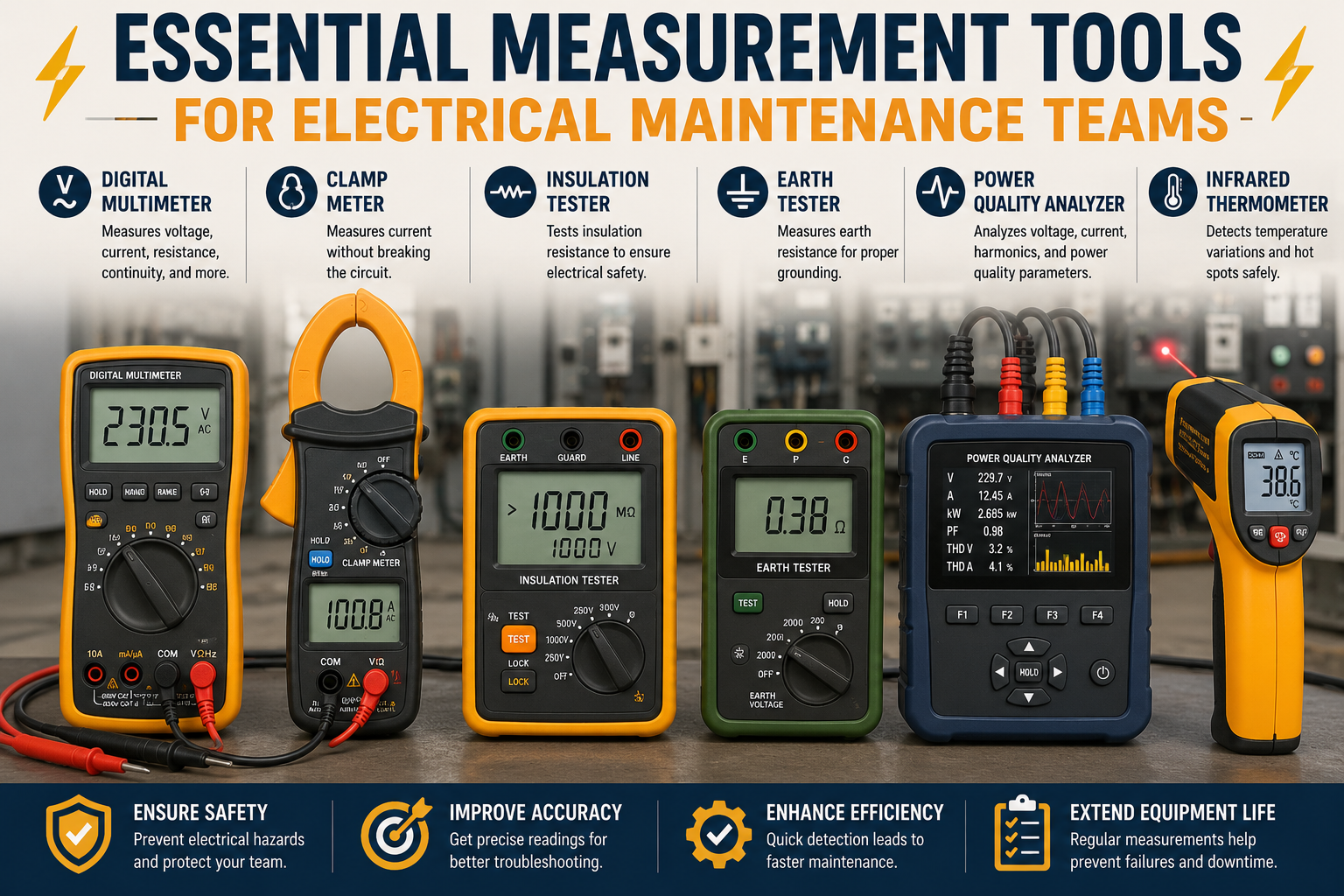
The job of an electrical maintenance team goes far beyond merely reacting to faults. That’s because, whether such personnel are operating across commercial premises, industrial installations, or facilities management environments, they also need to be proficient in overseeing accurate diagnostics, preventative testing, and documentation for compliance. These are all vital elements of maintenance.
To accomplish all this, however, these team members will need access to suitable electrical measurement tools. This will leave them strongly placed to identify issues earlier, minimise downtime, and improve electrical safety.
Here, then, are some of the measurement instruments they should have to hand.
- Digital Multimeters (DMMs): The Everyday Essential
If there is a single measurement tool that can claim to be the backbone of any electrical toolkit, it has to be a digital multimeter.
Often the first tool a maintenance staffer takes out of their case, a DMM supports routine fault-finding and verification by measuring:
- AC/DC voltage
- AC/DC current
- Resistance
- Continuity
- Diode function
- In some models, capacitance and frequency
The reputation of digital multimeters as hugely versatile testing tools can be attributed to their combination of multiple measurement functions into one handheld device. They’re a “go-to” for the quick diagnosis of circuits, outlets, motors, and control panels.
For maintenance staff whose work will bring them into contact with variable speed drives, modern building systems, and non-linear loads, it is advisable to seek out a DMM with true-RMS (Root Mean Square) capability.
- Clamp Meters: Safe Current Measurement
Also often referred to as “current clamps”, clamp meters give electricians and maintenance engineers a way of measuring current without the need to disconnect conductors. This can be ideal for live systems where breaking the circuit wouldn’t be a practical course of action.
So, whenever maintenance professionals find themselves needing to measure load current on cables, check for imbalances in three-phase systems, or troubleshoot motors or HVAC installations, a clamp meter can be an indispensable tool to have.
- Insulation Resistance Testers: Prevent Problems Before Failure
The degradation of insulation is a common cause of electrical faults. So, it greatly helps maintenance personnel if they have an instrument to hand that can detect such deterioration in cables, motors, transformers, and switchgear.
This is exactly what an insulation resistance tester, also often called a “megohmmeter” or even just an “insulation tester”, enables them to do.
A megohmmeter helps the evaluation of insulation condition by applying a controlled test voltage. This allows maintenance teams to identify deterioration early and reduce the risk of faults or hazards.
- Earth And Installation Testers: Supporting Compliance and Safety
It is critical for electrical installations to perform safely under fault conditions.
Installation testers can greatly help here, by enabling maintenance teams to verify such aspects as earth continuity, loop impedance, residual current device (RCD) performance, earth resistance, and installation integrity.
An installation tester is a comprehensive, multifunction diagnostic device for verifying the safety and integrity of fixed electrical wiring.
Meanwhile, an earth tester serves the purpose of measuring the electrical resistance between an installation’s earthing system and the soil.
- Oscilloscopes: Seeing Problems That Meters Miss
As useful as a standard multimeter can be, a key limitation is that it only provides numerical measurements. As a result, it may not reveal transient behaviour or waveform shape. An oscilloscope, on the other hand, helps reveal electrical noise, spikes, signal distortion, and transient events.
By showing how electrical signals change over time, an oscilloscope can help draw attention to issues that might otherwise stay hidden to maintenance engineers.
Just A Few More Things for Maintenance Teams to Bear in Mind…
…it might seem overly “obvious” advice, but it is worth emphasising the importance of investing in quality tools from reputable suppliers. This helps ensure the equipment can rapidly pay for itself through reduced downtime and fewer emergency callouts.
Remember, too, that the instruments featured in this rundown must always be paired with proper training, appropriate personal protective equipment (PPE), and adherence to relevant regulations and standards. An example of the latter is the IET Wiring Regulations (BS 7671) for maintenance teams operating in the UK.

Imagine your Leicester student life as a dream TikTok video, where everything comes easily and is both beautiful and aesthetically pleasing. Friends are sharing Reels of stylish flats near universities, holding an iced latte. Meanwhile, “cheap rooms Leicester” starts to trend online.
Approximately 40,000 students enrol each year at either the University of Leicester or De Montfort University, enjoying the delicious curries and exciting football games. Although expenses may appear daunting initially, the best student accommodation Leicester will have you sorted. With this guide, you’ll learn the best neighbourhoods to stay in, room options, and ways to ensure safety and security while booking.
Understanding the Cost of Student Living in Leicester
The cost of living in Leicester is balanced, making it easy for students looking for De Montfort University accommodation and accommodation in Leicester. The primary cost here will be rent; however, even that is relatively low, so that the student will not have to worry about moving out early. Secondly, bills can be considered, but when shared with others, they become manageable. Food can also be purchased from the local markets, which are not expensive. The level ground makes bicycles a better means of transport than buses, which are cheaper.
Where to Live: Affordable Student Areas in Leicester
The neighbourhoods in Leicester vary as widely as your favourite playlists, ranging from energetic fun spots to serene hideouts with fast commutes to school via bike or bus routes, making them suitable options for those looking for student accommodation Leicester.
- Clarendon Park
Clarendon Park is a suburb located to the south of the city and characterised by vibrant cafes and beautiful parks where you can enjoy leisure time like it is from those soothing coffee clips found online. The rents here are relatively cheap; hence, there will always be enough money left to go to brunch and take pictures. It is easy to commute to school by public transport.
- Highfields
Highfields is located right next to the University of Leicester campus, with food kiosks and markets offering a range of tastes, along with green parks ideal for picnics and leisurely walks, making any dull day feel cheerful. Travelling by foot means not spending any money on getting around town, making it easier to get around university life without breaking the bank.
- West End
West End welcomes all party-loving souls with luxurious homes of the past turned into places where you can enjoy pubbing in low-cost drinks, running into markets full of delicious foods, and taking fast public transportation to both universities. It provides you with all the fun and entertainment without feeling chaotic like your favourite song on repeat.
- City Centre
City Centre is ideal for those seeking an easy life, as it is only a short walk from DMU, with nearby Highcross shopping centres, restaurants, and cinemas to ensure an enjoyable evening, with walking taking care of transport, food, and entertainment. Although pricey, it ensures you save much-needed time by avoiding endless waiting hours.
- Evington
Evington provides a peaceful environment to the east, with convenient shops, the picturesque Evington Park, perfect for barbecue or studying and a bike ride to school. Budget-friendly and not too energetic, it helps you avoid chaos and enjoy true relaxation. As a lesser-known option, it offers you much-needed tranquillity at affordable rates.
Choosing the Right Type of Affordable Accommodation
Just like the choice of music depends on the individual’s personality, so does the selection of accommodation, since there is a room type that will suit everyone.
- Shared houses
Sharing a house with others means that the costs are split equally among all of them; the renter gets a private bedroom but shares the communal kitchen and lounge, where people cook meals, watch television together into the night, and make lots of friends at very little expense.
- Student halls
Campus hall accommodations provide an automatic sense of security, access to various student activities, and a place where they can start their university life hassle-free, without having to deal with the landlord.
- Ensuite rooms
Ensuite rooms mean sharing everything except the bathroom, and the prices are reasonable enough to be affordable for most people who love cleanliness.
- Studio apartments
For people craving absolute privacy and independence, studio flats offer a perfect solution, as they have a bed, kitchen, and bathroom all in one, allowing personalisation of one’s space.
Best Budget Student Accommodations in Leicester
| Property Name | Area | Starting Price | Key Advantage | Ideal For |
| Ben Russell Court | West End | £85 | Very affordable rent | Budget-first students |
| The Summit | City Centre | £110 | Bills included | Hassle-free living |
| Castle Court | City Centre | £115 | Close to DMU | Walk-to-campus |
| Regents Court | City Centre | £120 | Modern facilities | Comfort + value |
| Upperton Road | West End | £105 | Good connectivity | Social lifestyle |
Smart Tips to Save Money on Student Accommodation in Leicester
- Target Highfields for the Lowest Rents Near Campus: Being close to campus allows you to walk to university and save some money to spend on small treats on the way there.
- Walk or Cycle Instead of Living in the City Centre: With flat terrain, it is easy to avoid paying for travel and enjoy the fresh air on your way.
- Choose All-Inclusive Student Halls in Leicester: All-inclusive rent saves you unexpected future surprises. Booking with UniAcco gives you all-inclusive rent, which includes the utility bill, so there will be no surprises during the term.
- Book Before Peak Intake Seasons: By booking early, you’ll avoid peak rental times and high prices.
- Share Houses in Student-Dense Areas Like West End: Consider renting shared properties; sharing makes accommodation cheaper.
Conclusion
The comprehensive guide to Leicester’s budget options is all set for you, from exciting food outings in Highfields to fun places in the West End, from the fabulous Ben Russell Court to advice that keeps money flowing. No need for expensive budgets to lead an amazing life close to campus.
The Mock Audit That Pays for Itself: How Internal RADV Simulations Reduce Real Audit Exposure

Essential Measurement Tools for Electrical Maintenance Teams

Affordable Student Accommodation in Leicester: Where to Live on a Budget

Ben Shephard Wife Illness: What Is Really Known About Annie’s Health And Their Life Together

Mark Redknapp: The Real Story Behind Harry Redknapp’s Low-Key Son

Salish Matter – From YouTube Star to Global Teen Icon
Top 10 Best Online Slots 2026 Best Slots to Play
Top 10 Best Online Slots 2026 Best Slots to Play
Picture two players on a Friday evening. The first one leaps straight into a high-volatility fantasy epic, chasing a 5,000x jackpot with a £4 stake and a grin. The second sits with a cup of tea, spinning a low-volatility fruit machine at 20p a go, banking small wins every few minutes and nursing a single balance for an hour. Neither is wrong. The trick to finding the top 10 best online slots for you is working out which of those two players you actually are, not which one the lobby is shouting about.
The truth is that the best slot for one person is a chore for another. A game’s appeal rests on a handful of measurable traits — RTP, volatility, hit frequency and the feature set — and once you can read those numbers, you stop relying on luck and start choosing with intent. This guide walks you through exactly how to do that, points you towards the titles that consistently deliver, and explains the mechanics that separate a great spin from a mediocre one.
What Actually Makes a Slot Worth Your Time
Before any talk of bonus rounds, every slot is built on a random number generator that decides each spin’s outcome independently. The two numbers that matter most are RTP and volatility, and they answer different questions. RTP — return to player — is the theoretical share of all wagered money a game repays over millions of spins. A 96.5% game returns £96.50 for every £100 staked in the long run. Volatility describes the shape of that return: low-volatility games pay small amounts often, while high-volatility ones pay bigger sums but less frequently, with longer dry spells in between.
When we assess the best slots, we look for games that balance these traits honestly. Titles like Starburst XXXtreme push volatility into the stratosphere, while Book of Dead sits comfortably in the medium-high range, offering expanding symbols and a free-spins round that can produce genuinely memorable payouts. The sweet spot for most players is a medium-volatility game with an RTP above 96%, because it delivers enough regular feedback to stay entertaining without requiring a patient banker’s mindset.
You should also factor in the maths behind the bonus. A slot’s feature isn’t just a bit of fun; it’s a mathematical construct with its own expected value. A free-spins round with multipliers attached, for instance, often carries more of the game’s total return than the base game. That’s why two slots with identical RTPs can feel completely different — one might pay most of its return through frequent small base-game hits, while another concentrates it in a rare but explosive feature.
How to Read RTP and Volatility Without the Hype
Let’s be honest: most players glance at an RTP of 96.5% and move on. The more useful habit is comparing games within a provider’s own catalogue, because RTP can vary slightly between versions of the same title. The certified figure comes from independent testing laboratories that audit the RNG under the UK Gambling Commission regime; licensed operators display their licence number, and the games themselves are tested for fairness before they reach a UK lobby. That audit process is the reason you can trust the published percentages, even if they don’t tell you exactly what will happen in your next hundred spins.
Volatility is trickier to quantify because there’s no universal scale. Some providers publish a rating out of ten, others use a low-to-extreme ladder, and a few simply don’t tell you. A practical approach is to read the paytable and the max win. A slot advertising a 50,000x maximum win is almost certainly high volatility, because that prize only appears through a rare combination of feature triggers and multipliers. Conversely, a game with a modest 500x top prize and frequent small pays is likely low to medium.
Here’s a worked example to anchor the maths. If a £50 bonus carries a 35x wagering requirement, you must spin through £1,750 of turnover before withdrawing any winnings. That figure matters because it tells you how long your session needs to last and whether a high-volatility slot is a sensible partner for that particular bonus. Playing a 20x requirement with the same £50 bonus demands only £1,000 of turnover — a far more realistic target on a volatile game.
The Features That Define Modern Slots
Modern slots rarely rely on a single mechanic. The best ones layer features intelligently, and recognising how they work helps you pick games that suit your style. Megaways mechanics, for instance, swap fixed paylines for a variable number of ways to win — often up to 117,649 — with each spin’s reel heights changing randomly. Games like Bonanza and Extra Chilli built their reputations on this system, and their cascading reels mean a single spin can chain multiple wins together.
Jackpot slots work differently. Progressive jackpots pool a slice of every stake across a network, so the prize grows until someone hits it. The odds are long and the volatility extreme, but the appeal is obvious. If you prefer a middle ground, look for fixed jackpot slots that offer a substantial top prize without the network pooling. Meanwhile, hold-and-nudge mechanics — popularised by the Big Bass series — give you respins that lock winning symbols in place, adding a layer of skill-adjacent decision making that many players find addictive in the best sense.
The lesson is to match the mechanic to your temperament. If you want frequent interaction, seek out cascading reels and bonus buys. If you prefer the slow build, a classic three-reel game with a nudge feature might serve you better. The slots guide on this site covers these mechanics in more depth if you want to dig into the nuances.
Stake Limits and Structuring a Responsible Session
UK players operate under a specific set of rules that shape how you should approach slots. Since April 2020, credit cards have been barred for gambling across Great Britain, so your deposit must come from a debit card, e-wallet or another approved method. More recently, stake limits for online slots arrived in 2025: £5 per spin for most players and £2 per spin for those aged 18 to 24. These are hard regulatory limits, not commercial choices, and they apply across every UKGC-licensed operator.
What this means in practice is that a single spin can never cost you more than £5 — or £2 if you’re under 25 — which changes the economics of high-volatility chasing. A £5 spin on a volatile game can still produce a handsome payout, but you’ll need to pace yourself. A sensible session structure involves deciding your total budget before you open the lobby, dividing it into spins, and setting a time limit. Many players also use the operator’s own responsible gambling tools, such as deposit limits and reality checks, to keep the session honest.
For most people, the £2 to £5 range is more than sufficient to enjoy everything the category offers. The best approach is to treat your bankroll as an entertainment budget — money you’re prepared to spend on a night’s fun, not an investment. If you find yourself chasing losses or extending sessions beyond your plan, that’s the signal to step away. GAMSTOP, the free national self-exclusion scheme, remains available at gamstop.co.uk for anyone who needs a longer break, and GambleAware offers free support whenever you need a chat.
The Notable Titles and Where to Play Them
Our shortlist of the best slots spans different mechanics, so there’s something for every taste. The table below summarises five titles that consistently earn their place in the conversation, with their typical RTP and volatility profiles.
| Slot Title | Provider | RTP (Typical) | Volatility | Signature Feature | Best For |
|---|---|---|---|---|---|
| Book of Dead | Play’n GO | 96.21% | Medium-High | Expanding symbols in free spins | Classic adventure fans |
| Bonanza | Big Time Gaming | 96.00% | High | Megaways cascades | Big win chasers |
| Starburst XXXtreme | NetEnt | 96.28% | Extreme | Multipliers and respins | High-risk thrill seekers |
| Big Bass Bonanza | Pragmatic Play | 96.71% | Medium | Hold and nudge respins | Regular action lovers |
| Gates of Olympus | Pragmatic Play | 96.50% | High | Multiplier orbs and free spins | Feature-driven players |
Remember that published RTPs and volatility ratings are the provider’s stated figures at launch; operators can request different settings for the same game, so always check the paytable inside the game itself before you commit. Terms change, and the smart player verifies before spinning.
As for where to play, the UK market has a strong roster of licensed operators, each with its own strengths. Prime Casino carries a broad selection of titles from the major studios and supports fast payouts on e-wallets. Videoslots is renowned for its enormous game library and regular slot tournaments, which add a competitive edge to the standard spin. Betfair casino brings decades of brand heritage and a solid, dependable lobby that suits players who value consistency over novelty. Duelz casino, meanwhile, gamifies the experience with duels and leaderboards, which rewards frequent play in an entertaining way.
For demo play, most operators let you try games without staking real money, which is ideal for testing a high-volatility title before you risk your bankroll. Our demo slots uk guide explains how to make the most of free play. And if you’re weighing up different lobbies, the table below gives you a quick comparison of what to expect.
| Operator | Provider Range | Demo Play | Payout Speed | Standout Trait |
|---|---|---|---|---|
| Prime Casino | Broad multi-studio | Yes | Fast on e-wallets | Balanced all-rounder |
| Videoslots | Very large | Yes | Fast | Tournaments and library size |
| Betfair casino | Solid core studios | Yes | Reliable | Trusted heritage brand |
| Duelz casino | Good selection | Yes | Standard | Gamified duels and rewards |
When you’re ready to explore beyond this shortlist, the casino games uk hub covers the wider landscape, and our trusted casino picks roundup helps you shortlist operators that suit your preferences. The best approach is to open a demo, test a handful of titles, and only then commit real money to the games that genuinely entertain you.
Gambling is entertainment with a cost, not a way to make money, and it’s strictly for those aged 18 and over. If you ever feel it’s becoming a problem, reach out to BeGambleAware for free, confidential support, or consider GAMSTOP to take a break from all licensed sites.
Questions Players Ask About Slots
How does RTP affect my actual session?
RTP is a long-term theoretical figure, not a promise for any single session. Over thousands of spins, a 96% game returns £96 per £100 staked, but your individual session could finish well above or below that line. Use RTP to compare games fairly rather than to predict tonight’s outcome.
What volatility should a beginner choose?
Start with low or medium volatility, because the frequent small wins keep the session engaging and your bankroll lasts longer. High-volatility games can go dozens of spins without a hit, which is frustrating when you’re still learning how the features trigger. Move up once you’re comfortable with the rhythm.
When does demo play make sense?
Always test a new slot in demo mode first, especially if it’s high volatility or uses an unfamiliar mechanic like Megaways. Free play lets you learn the feature triggers and paytable without financial risk, so you’ll know exactly what you’re getting into when you switch to real money.
Why are jackpot odds so long?
Progressive jackpots pool contributions from every player on the network, and the prize only pays when a specific rare combination lands. The odds are deliberately long because the payout is enormous. If you enjoy the dream, treat jackpot spins as a small entertainment cost within a broader budget, never as a reliable strategy.
Can I combine multiple bonuses on one slot?
Operators set their own rules on wagering contributions and bonus stacking, and these are commercial terms rather than legal requirements. Some games contribute 100% of each stake toward the wagering requirement, while others contribute less or are excluded entirely. Always read the specific bonus terms before you activate an offer, because the game weighting can dramatically change how long a bonus takes to clear.
How to Turn This Ranking Into Your Own Shortlist
The real skill isn’t memorising a list of games — it’s knowing how to filter them. Start by writing down three things: your typical session length, your comfort with losing streaks, and the size of your usual stake. If you only have fifteen minutes at lunch, a high-volatility title that needs fifty spins to show its hand is the wrong choice; a medium-volatility game with frequent base-game hits will serve you far better. If you’re settling in for a long evening, the slow burn of a progressive jackpot slot might be exactly the entertainment you want.
Your stake also matters more than most players realise. Under the UK rules, you’re capped at £5 per spin, or £2 if you’re aged 18 to 24. A high-volatility game at £5 a spin can empty a £100 budget in twenty spins without a single feature trigger. At £0.50 a spin, the same game becomes a patient, sustainable session. The game hasn’t changed; your bankroll management has. That’s why the best players treat stake size as a strategic choice, not a default setting.
Finally, consider the operator’s overall fit. A superb slot is only as good as the lobby that hosts it. If you value lightning-fast withdrawals, look for operators with strong e-wallet support. If you enjoy tournaments, a site with regular slot competitions adds a layer of excitement to every spin. And if you’re still exploring, demo play lets you test the water before committing a penny. The top 10 best online slots for you are the ones that match your habits, your budget, and your idea of fun — not the ones with the loudest marketing.
Take your time, play within your means, and remember that every spin is a moment of entertainment, not a step toward a guaranteed outcome. If you ever feel the fun is slipping away, step back, use the tools available, and reach out to BeGambleAware or GAMSTOP for support. The best session is always the one you can walk away from with a smile, whatever the balance says.
One steady habit protects every session: keep sessions short and never chase a losing run; remember the 18+ rule, and keep GambleAware and GAMSTOP (gamstop.co.uk) one tap away.
Health & Fitness
The Mock Audit That Pays for Itself: How Internal RADV Simulations Reduce Real Audit Exposure
The Cheapest Audit Defense You Can Build
Internal RADV simulations cost a fraction of actual audit response. A plan selects 100 to 200 enrollee-years from its submitted data, oversampling high-risk diagnosis categories. An internal review team evaluates each sampled HCC against MEAT criteria using the same standard CMS auditors apply. The team calculates an internal error rate, identifies which diagnosis categories fail most often, and documents the specific documentation failures driving those results.
The simulation produces three things no other compliance activity delivers. First, a predictive error rate that forecasts what CMS will find when the real audit arrives. Second, a prioritized remediation list identifying the specific documentation gaps that contribute most to audit failure. Third, a rehearsal of the audit response process that reveals operational bottlenecks before they matter under real deadline pressure.
How to Design a Simulation That Predicts Real Results
The simulation’s predictive value depends on how closely it replicates CMS’s methodology. Sample from your submitted data, not from your coding queue. Include members whose codes were submitted in prior years that haven’t been re-validated. Oversample the high-impact diagnosis categories CMS is known to target: acute stroke, MI, cancer, and other conditions OIG audits have focused on.
Apply the MEAT standard strictly. If the documentation doesn’t show active monitoring, evaluation, assessment, or treatment of the condition during the relevant encounter, the code fails. Don’t give credit for “the provider probably managed this condition.” CMS auditors don’t infer management that isn’t documented. Your simulation shouldn’t either.
Use reviewers who weren’t involved in the original coding decision. If the coder who submitted the code also evaluates it in the simulation, confirmation bias inflates the pass rate. Independent reviewers produce error rates closer to what CMS auditors will find because they evaluate documentation without the context the original coder had.
What the Results Tell You
An internal error rate below 15% suggests your coding program produces predominantly defensible output. Focus remediation on the specific categories and documentation patterns that make up the failing 15%.
An error rate between 15% and 40% signals systematic documentation gaps that need programmatic fixes: enhanced MEAT validation in the coding workflow, category-specific evidence thresholds for high-risk diagnoses, and provider education targeting the documentation patterns that fail most frequently.
An error rate above 40% indicates the program is producing output that won’t survive RADV scrutiny at current quality levels. This requires structural intervention: technology changes, methodology redesign, and immediate proactive deletion of the weakest codes from the plan’s active submissions.
The Investment That Pays Before the Audit Arrives
A quarterly internal simulation costs less than a single week of real RADV response. It predicts audit outcomes before they happen, identifies remediation targets while there’s still time to fix them, and stress-tests the response process under controlled conditions. Plans running regular radv audits simulations convert a reactive, high-stress compliance function into a proactive, predictable one. The simulation doesn’t prevent the audit. It prevents the surprise.
The job of an electrical maintenance team goes far beyond merely reacting to faults. That’s because, whether such personnel are operating across commercial premises, industrial installations, or facilities management environments, they also need to be proficient in overseeing accurate diagnostics, preventative testing, and documentation for compliance. These are all vital elements of maintenance.
To accomplish all this, however, these team members will need access to suitable electrical measurement tools. This will leave them strongly placed to identify issues earlier, minimise downtime, and improve electrical safety.
Here, then, are some of the measurement instruments they should have to hand.
- Digital Multimeters (DMMs): The Everyday Essential
If there is a single measurement tool that can claim to be the backbone of any electrical toolkit, it has to be a digital multimeter.
Often the first tool a maintenance staffer takes out of their case, a DMM supports routine fault-finding and verification by measuring:
- AC/DC voltage
- AC/DC current
- Resistance
- Continuity
- Diode function
- In some models, capacitance and frequency
The reputation of digital multimeters as hugely versatile testing tools can be attributed to their combination of multiple measurement functions into one handheld device. They’re a “go-to” for the quick diagnosis of circuits, outlets, motors, and control panels.
For maintenance staff whose work will bring them into contact with variable speed drives, modern building systems, and non-linear loads, it is advisable to seek out a DMM with true-RMS (Root Mean Square) capability.
- Clamp Meters: Safe Current Measurement
Also often referred to as “current clamps”, clamp meters give electricians and maintenance engineers a way of measuring current without the need to disconnect conductors. This can be ideal for live systems where breaking the circuit wouldn’t be a practical course of action.
So, whenever maintenance professionals find themselves needing to measure load current on cables, check for imbalances in three-phase systems, or troubleshoot motors or HVAC installations, a clamp meter can be an indispensable tool to have.
- Insulation Resistance Testers: Prevent Problems Before Failure
The degradation of insulation is a common cause of electrical faults. So, it greatly helps maintenance personnel if they have an instrument to hand that can detect such deterioration in cables, motors, transformers, and switchgear.
This is exactly what an insulation resistance tester, also often called a “megohmmeter” or even just an “insulation tester”, enables them to do.
A megohmmeter helps the evaluation of insulation condition by applying a controlled test voltage. This allows maintenance teams to identify deterioration early and reduce the risk of faults or hazards.
- Earth And Installation Testers: Supporting Compliance and Safety
It is critical for electrical installations to perform safely under fault conditions.
Installation testers can greatly help here, by enabling maintenance teams to verify such aspects as earth continuity, loop impedance, residual current device (RCD) performance, earth resistance, and installation integrity.
An installation tester is a comprehensive, multifunction diagnostic device for verifying the safety and integrity of fixed electrical wiring.
Meanwhile, an earth tester serves the purpose of measuring the electrical resistance between an installation’s earthing system and the soil.
- Oscilloscopes: Seeing Problems That Meters Miss
As useful as a standard multimeter can be, a key limitation is that it only provides numerical measurements. As a result, it may not reveal transient behaviour or waveform shape. An oscilloscope, on the other hand, helps reveal electrical noise, spikes, signal distortion, and transient events.
By showing how electrical signals change over time, an oscilloscope can help draw attention to issues that might otherwise stay hidden to maintenance engineers.
Just A Few More Things for Maintenance Teams to Bear in Mind…
…it might seem overly “obvious” advice, but it is worth emphasising the importance of investing in quality tools from reputable suppliers. This helps ensure the equipment can rapidly pay for itself through reduced downtime and fewer emergency callouts.
Remember, too, that the instruments featured in this rundown must always be paired with proper training, appropriate personal protective equipment (PPE), and adherence to relevant regulations and standards. An example of the latter is the IET Wiring Regulations (BS 7671) for maintenance teams operating in the UK.
Imagine your Leicester student life as a dream TikTok video, where everything comes easily and is both beautiful and aesthetically pleasing. Friends are sharing Reels of stylish flats near universities, holding an iced latte. Meanwhile, “cheap rooms Leicester” starts to trend online.
Approximately 40,000 students enrol each year at either the University of Leicester or De Montfort University, enjoying the delicious curries and exciting football games. Although expenses may appear daunting initially, the best student accommodation Leicester will have you sorted. With this guide, you’ll learn the best neighbourhoods to stay in, room options, and ways to ensure safety and security while booking.
Understanding the Cost of Student Living in Leicester
The cost of living in Leicester is balanced, making it easy for students looking for De Montfort University accommodation and accommodation in Leicester. The primary cost here will be rent; however, even that is relatively low, so that the student will not have to worry about moving out early. Secondly, bills can be considered, but when shared with others, they become manageable. Food can also be purchased from the local markets, which are not expensive. The level ground makes bicycles a better means of transport than buses, which are cheaper.
Where to Live: Affordable Student Areas in Leicester
The neighbourhoods in Leicester vary as widely as your favourite playlists, ranging from energetic fun spots to serene hideouts with fast commutes to school via bike or bus routes, making them suitable options for those looking for student accommodation Leicester.
- Clarendon Park
Clarendon Park is a suburb located to the south of the city and characterised by vibrant cafes and beautiful parks where you can enjoy leisure time like it is from those soothing coffee clips found online. The rents here are relatively cheap; hence, there will always be enough money left to go to brunch and take pictures. It is easy to commute to school by public transport.
- Highfields
Highfields is located right next to the University of Leicester campus, with food kiosks and markets offering a range of tastes, along with green parks ideal for picnics and leisurely walks, making any dull day feel cheerful. Travelling by foot means not spending any money on getting around town, making it easier to get around university life without breaking the bank.
- West End
West End welcomes all party-loving souls with luxurious homes of the past turned into places where you can enjoy pubbing in low-cost drinks, running into markets full of delicious foods, and taking fast public transportation to both universities. It provides you with all the fun and entertainment without feeling chaotic like your favourite song on repeat.
- City Centre
City Centre is ideal for those seeking an easy life, as it is only a short walk from DMU, with nearby Highcross shopping centres, restaurants, and cinemas to ensure an enjoyable evening, with walking taking care of transport, food, and entertainment. Although pricey, it ensures you save much-needed time by avoiding endless waiting hours.
- Evington
Evington provides a peaceful environment to the east, with convenient shops, the picturesque Evington Park, perfect for barbecue or studying and a bike ride to school. Budget-friendly and not too energetic, it helps you avoid chaos and enjoy true relaxation. As a lesser-known option, it offers you much-needed tranquillity at affordable rates.
Choosing the Right Type of Affordable Accommodation
Just like the choice of music depends on the individual’s personality, so does the selection of accommodation, since there is a room type that will suit everyone.
- Shared houses
Sharing a house with others means that the costs are split equally among all of them; the renter gets a private bedroom but shares the communal kitchen and lounge, where people cook meals, watch television together into the night, and make lots of friends at very little expense.
- Student halls
Campus hall accommodations provide an automatic sense of security, access to various student activities, and a place where they can start their university life hassle-free, without having to deal with the landlord.
- Ensuite rooms
Ensuite rooms mean sharing everything except the bathroom, and the prices are reasonable enough to be affordable for most people who love cleanliness.
- Studio apartments
For people craving absolute privacy and independence, studio flats offer a perfect solution, as they have a bed, kitchen, and bathroom all in one, allowing personalisation of one’s space.
Best Budget Student Accommodations in Leicester
| Property Name | Area | Starting Price | Key Advantage | Ideal For |
| Ben Russell Court | West End | £85 | Very affordable rent | Budget-first students |
| The Summit | City Centre | £110 | Bills included | Hassle-free living |
| Castle Court | City Centre | £115 | Close to DMU | Walk-to-campus |
| Regents Court | City Centre | £120 | Modern facilities | Comfort + value |
| Upperton Road | West End | £105 | Good connectivity | Social lifestyle |
Smart Tips to Save Money on Student Accommodation in Leicester
- Target Highfields for the Lowest Rents Near Campus: Being close to campus allows you to walk to university and save some money to spend on small treats on the way there.
- Walk or Cycle Instead of Living in the City Centre: With flat terrain, it is easy to avoid paying for travel and enjoy the fresh air on your way.
- Choose All-Inclusive Student Halls in Leicester: All-inclusive rent saves you unexpected future surprises. Booking with UniAcco gives you all-inclusive rent, which includes the utility bill, so there will be no surprises during the term.
- Book Before Peak Intake Seasons: By booking early, you’ll avoid peak rental times and high prices.
- Share Houses in Student-Dense Areas Like West End: Consider renting shared properties; sharing makes accommodation cheaper.
Conclusion
The comprehensive guide to Leicester’s budget options is all set for you, from exciting food outings in Highfields to fun places in the West End, from the fabulous Ben Russell Court to advice that keeps money flowing. No need for expensive budgets to lead an amazing life close to campus.